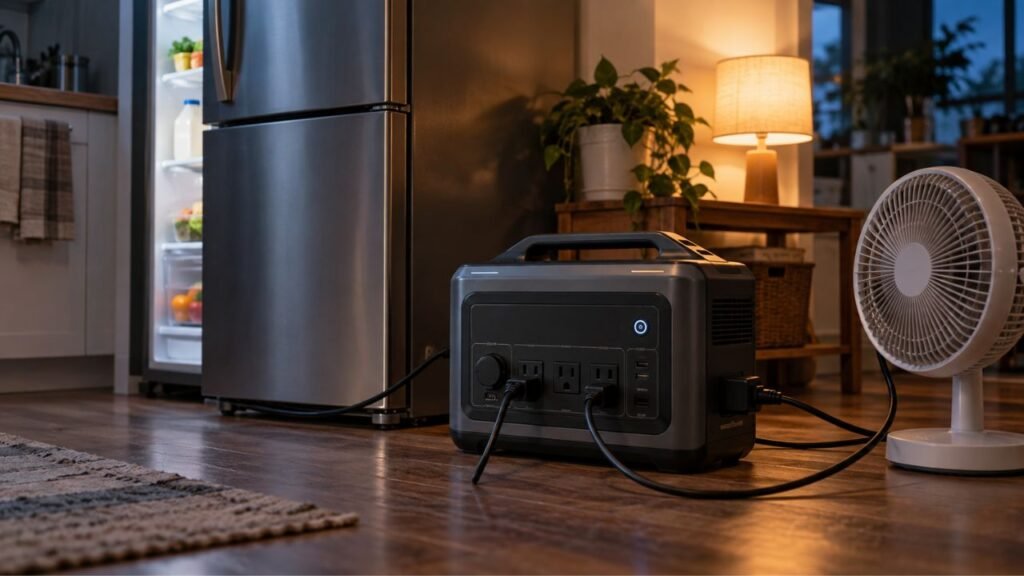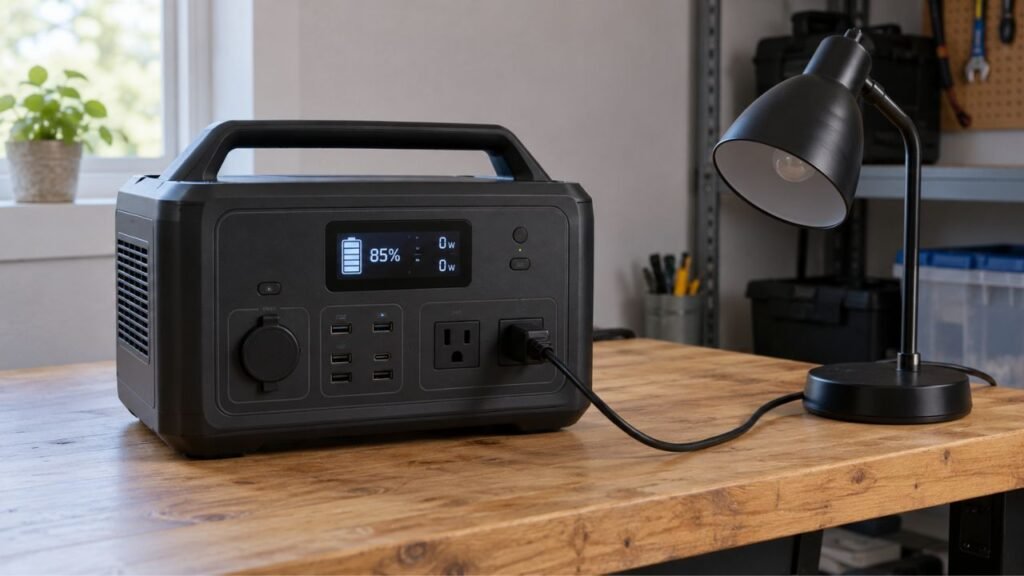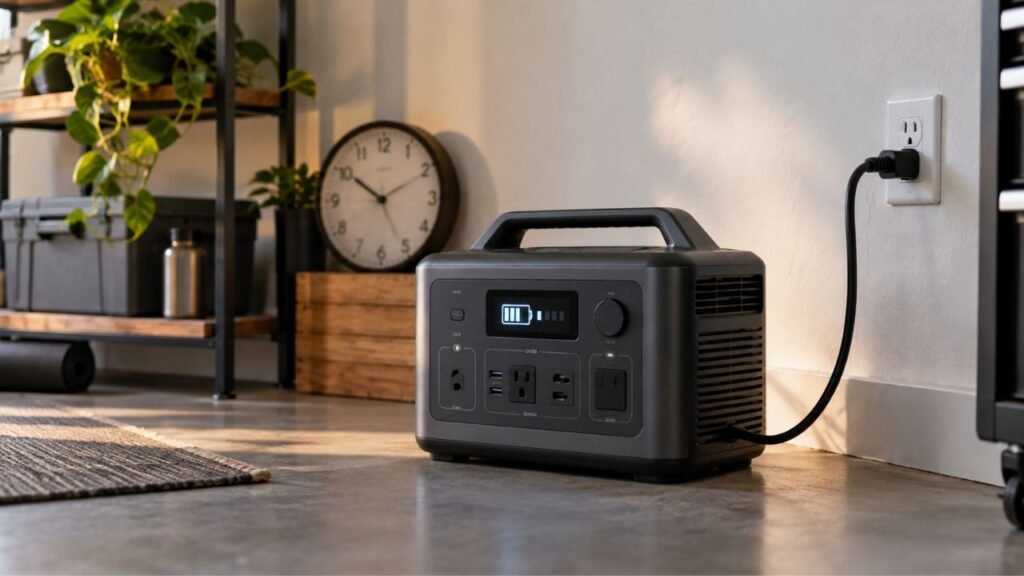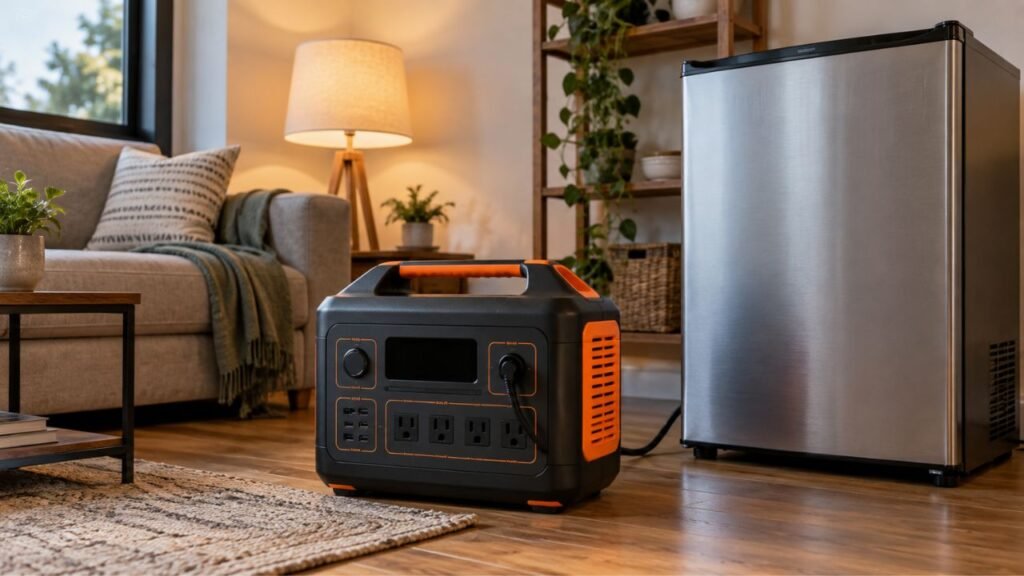
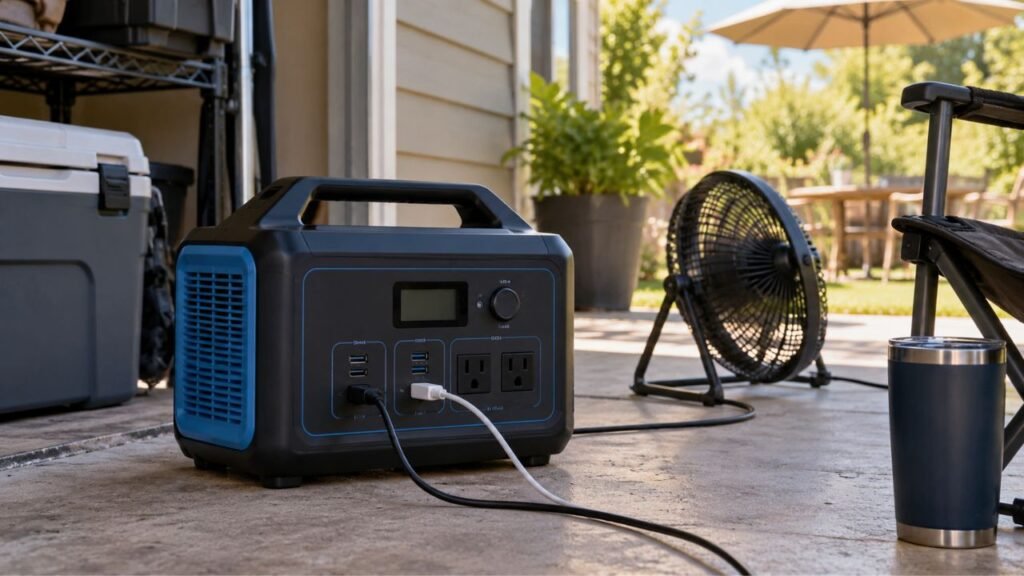
Your portable power station may overheat because airflow is restricted, the electrical load is too high, or the surrounding temperature is excessive. Fast charging, blocked cooling fans, damaged cables, and internal hardware problems can also create excessive heat.
Some warmth is completely normal during charging or heavy appliance use. In this guide, I’ll help you identify abnormal overheating, find the likely cause, cool your power station safely, and prevent the problem from returning.
Key Takeaways
- Mild warmth during charging or heavy use is usually normal.
- Blocked vents can quickly trap heat inside the power station.
- Large electrical loads make the inverter produce additional heat.
- Direct sunlight and hot vehicles can cause thermal shutdowns.
- Fast charging can make the battery and charging circuits warmer.
- Constant overheating under small loads may indicate hardware problems.
- Temperature shutdowns usually mean built-in protection is working correctly.
- Swelling, smoke, leaking, or chemical odors require immediate attention.
- Always follow your specific model’s operating temperature recommendations.
Is It Normal for a Portable Power Station to Get Hot?
Yes, a portable power station becoming slightly warm is completely normal. Electricity cannot move through batteries and electronics without creating some heat.
Your power station contains several components that generate heat during operation. These include the battery, inverter, charger, wiring, and voltage converters.
The inverter often produces noticeable warmth when powering AC appliances. The charging system can also become warm during high-speed AC charging.
You may also hear the cooling fan turn on automatically. That usually means the thermal management system is working properly.
The important question is whether the unit feels normally warm or excessively hot.
Normal warmth usually comes without warning messages or unexpected shutdowns. Excessive heat may trigger temperature warnings, reduced charging speed, or automatic shutdown.
You should become more concerned when overheating repeatedly happens during light use. That can indicate restricted cooling or an internal component problem.
Avoid relying on one universal temperature number for every power station. Different batteries and models have different safe operating temperature ranges.
Your owner’s manual provides the most reliable limits for your model.
Quick Diagnosis: Why Is Your Power Station Overheating?
The circumstances surrounding the overheating provide important clues. Use this table to narrow down the most likely cause.
| What You Notice | Likely Cause | What to Check First |
| Hot during a large AC load | Heavy inverter load | Total appliance wattage |
| Hot mainly during charging | High charging power | Charging rate and environment |
| Hot while charging and powering appliances | Combined input and output heat | Pass-through operation support |
| Hot outdoors during summer | High ambient temperature | Shade and airflow |
| Fan runs loudly during heavy loads | Normal active cooling | Load level and warning icons |
| Fan never runs despite excessive heat | Cooling fan problem | Fan vents and error messages |
| Hot inside cabinets or storage areas | Restricted ventilation | Intake and exhaust clearance |
| One connector becomes unusually hot | Poor electrical connection | Cable, plug, and port condition |
| Overheats during small loads | Possible hardware problem | Fan, error codes, and support |
| Swelling, smoke, or chemical smell appears | Serious battery problem | Stop using the unit |
Common Reasons a Portable Power Station Overheats
Several conditions can make your power station hotter than expected. Some are simple placement problems, while others require professional support.
Blocked Air Vents or Poor Ventilation
Restricted ventilation is one of the most common overheating causes.
Portable power stations usually pull cooler air through one vent. Warm air then exits through another vent or cooling opening.
Placing something against those openings prevents proper heat removal.
This often happens when people place power stations against walls. It can also happen inside cabinets, bags, RV compartments, or closets.
Soft surfaces can create another problem. Carpets, blankets, bedding, and cushions may partially cover lower vents.
Place your power station on a stable, hard surface instead. Keep the ventilation openings completely unobstructed during operation.
Check your manual for any recommended clearance around those vents.
Running Too Much Electrical Load
High electrical loads naturally create more heat inside the inverter.
Suppose your power station provides 1,800 watts of continuous AC output. Running appliances around 1,700 watts keeps the inverter working very hard.
That does not automatically mean you are technically overloading it. However, sustained high output usually creates considerably more internal heat.
The problem becomes worse when the surrounding environment is already hot.
Add the wattages of every connected appliance before troubleshooting overheating. Make sure their combined load remains comfortably within the continuous rating.
Also remember that some appliances have large startup surges.
Refrigerators, pumps, air conditioners, and power tools can briefly demand extra power.
Those sudden demands can create additional stress for the inverter.
Hot Weather or Direct Sunlight
Your power station must release its internal heat into surrounding air.
When that surrounding air is already hot, cooling becomes harder.
This matters during summer camping, tailgating, RV trips, and power outages. Garages and sheds can also become extremely hot during sunny afternoons.
A parked vehicle can become particularly problematic.
Never assume the power station is protected simply because windows are open. Interior vehicle temperatures can rise dramatically in direct sunlight.
Solar charging creates another common mistake.
Your solar panels need sunlight, but your power station does not.
Keep the panels exposed while placing the power station somewhere shaded. Make sure its cables still reach without being tightly stretched.
Fast Charging Generates Additional Heat
Modern portable power stations can recharge at very high wattages.
That fast charging capability is convenient, but it produces additional heat.
The battery cells receive significant current during high-speed charging. Charging electronics must also convert and regulate incoming electricity.
The cooling fans may therefore run during fast AC charging.
Some power stations let you choose slower charging through their applications. Reducing charging speed can sometimes reduce heat and fan noise.
However, normal warmth during fast charging does not indicate failure.
Pay attention when charging stops repeatedly because of temperature warnings.
Charging While Using the Power Station
Many modern stations support charging while powering connected equipment.
This feature may be called pass-through charging or UPS operation.
When properly supported, using this feature is not inherently dangerous. The power station was designed to manage simultaneous input and output.
However, it can create more heat than simple charging alone.
The charging circuits are handling incoming power while other electronics supply output.
Heavy appliances can make this situation even more demanding.
If overheating happens only during simultaneous charging and heavy output, reduce the load. You can also separate charging and appliance use for troubleshooting.
Always confirm that your particular model supports your intended configuration.
Dust, Debris, or Blocked Cooling Fans
Cooling vents gradually collect dust, pet hair, and other debris.
This problem develops faster in workshops, garages, campsites, and dusty RV compartments.
A dirty vent reduces the volume of cooling air reaching components.
Inspect the vents regularly using a flashlight when the unit is off. Remove loose exterior dust according to the manufacturer’s cleaning instructions.
Never insert screwdrivers or other objects through ventilation openings.
You should also avoid opening the enclosure yourself. Portable power stations contain high-energy batteries and electrical components.
Opening the case can create safety problems and affect warranties.
Cooling Fan Failure
A damaged cooling fan can create overheating even with clear vents.
Pay attention to how your fan normally behaves during heavy use.
Many power stations keep their fans off during smaller loads. The fans activate only when internal temperature or output increases.
Therefore, a silent fan does not automatically mean something is wrong.
Look for other clues instead.
The station might become unusually hot during moderate loads. It might display a fan warning or repeatedly shut down.
You could also hear grinding, clicking, scraping, or rattling sounds.
Those symptoms deserve manufacturer support rather than DIY fan replacement.
Damaged Cable, Loose Connector, or Charging Accessory
Sometimes the entire power station is not actually overheating.
Instead, one cable, plug, adapter, or charging port becomes unusually hot.
Poor electrical connections create additional resistance. That resistance converts some electrical energy directly into heat.
Inspect cables for damaged insulation, bent connectors, and loose-fitting plugs.
Stop using connectors showing melting, discoloration, or burning marks.
Use the charger supplied with your station when possible. Otherwise, use properly rated accessories approved for that model.
A charger fitting physically does not guarantee electrical compatibility.
Internal Battery, Inverter, or Circuit Board Problem
Overheating occasionally comes from an internal hardware failure.
This possibility becomes more likely when simple causes have been eliminated.
For example, imagine your station overheats indoors at normal temperatures. Only a small appliance is connected, and every vent remains clear.
That behavior would be harder to explain through normal operating conditions.
Battery damage, thermal sensors, circuit boards, or inverter components could be involved.
Physical impacts can also damage internal components without obvious exterior damage.
Do not keep increasing or decreasing loads indefinitely while testing it. Contact the manufacturer when overheating repeatedly occurs during ordinary operation.
Why Does My Power Station Overheat While Charging?
Charging creates heat differently from powering appliances. Looking specifically at the charging method can often reveal the problem faster.
AC Fast Charging
High-speed wall charging can generate considerable heat inside your station.
That heat comes from both the battery and charging electronics.
The cooling fan may become noticeably louder as charging power increases.
This alone is not usually a problem.
Check whether the unit displays an actual high-temperature warning. Also inspect the charger, cable, and charging connector.
A slightly warm connector can occur under substantial current.
A painfully hot, melted, or discolored connector needs immediate attention.
Solar Charging in Hot Sun
Solar charging commonly causes overheating because of power station placement.
People often place the station beside their solar panels.
That means both devices remain exposed to direct sunlight for hours.
Instead, keep your solar panels facing the sun. Put the power station underneath shade with unrestricted ventilation.
Do not wrap it with clothing or blankets to create shade.
That approach blocks airflow and can make overheating considerably worse.
Charging After Heavy Use
Your battery may already be warm after running large appliances.
Immediately beginning fast charging adds another source of heat.
Normally, the thermal management system can handle these transitions. However, hot environmental conditions can reduce available cooling capacity.
If a temperature warning appears, disconnect the charger.
Allow the power station to return to its recommended operating range.
Do not repeatedly reconnect charging while thermal protection remains active.
Charging Above the Recommended Temperature
Lithium batteries have specified temperature ranges for charging.
Those ranges vary between manufacturers, models, and battery chemistries.
Your power station may therefore refuse charging when temperatures become excessive.
That behavior protects the battery rather than indicating immediate failure.
Move the station somewhere cooler and let its temperature stabilize naturally.
Then follow your manual before restarting the charging process.
Why Does It Overheat When Running Appliances?
Appliance-related overheating usually involves output demand and inverter workload. Check the actual wattage before assuming your battery is defective.
Continuous Load Is Too High
Every portable power station has a continuous AC output rating.
Your connected appliances should remain within that limit.
However, consistently operating near the maximum output creates substantial heat.
Consider reducing unnecessary loads when the station becomes very warm.
You may also need a larger station for frequent high-power applications.
Appliance Startup Surge
Some appliances briefly require much more power when starting.
The compressor inside a refrigerator provides a common example.
Air conditioners, pumps, and certain tools behave similarly.
Their normal running wattage might appear perfectly acceptable. However, startup demand can briefly place heavier pressure on the inverter.
Look at both continuous output and surge capability when matching appliances.
Several Appliances Are Running Together
It is easy to underestimate total electrical consumption.
A refrigerator may be running alongside lights, computers, routers, and televisions.
Each appliance might look harmless when considered individually.
Together, however, they can create a demanding sustained load.
Use the power station’s display or application to check output wattage.
Disconnect unnecessary devices and watch whether the temperature improves.
High Load Plus High Ambient Temperature
Problems often result from several smaller factors happening together.
Your appliance load might normally be acceptable indoors.
That same load could trigger overheating inside a hot garage.
The inverter creates heat while the surrounding air removes that heat.
Higher ambient temperatures reduce the difference needed for efficient cooling.
Moving the station into shade may solve the issue immediately.
What Should You Do When a Portable Power Station Overheats?
If your power station shows a temperature warning or becomes unusually hot, remove the heat source and electrical demand first. Then inspect the unit before restarting it.
- Disconnect connected appliances. Removing output loads immediately reduces internal heat production.
- Stop charging the unit. Disconnect AC, vehicle, or solar charging inputs.
- Power the station down. Follow your manufacturer’s normal shutdown procedure.
- Check the display first. Note any temperature symbol or error code.
- Move it away from heat. Choose a dry, shaded, ventilated location.
- Place it on a hard surface. Avoid bedding, carpeting, cushions, and enclosed cabinets.
- Inspect the ventilation openings. Look for dust, debris, or blocked airflow.
- Allow the unit to cool naturally. Give its internal components enough recovery time.
- Inspect the exterior carefully. Check for swelling, deformation, melting, leaking, or discoloration.
- Restart cautiously if everything appears normal. Begin using a small electrical load first.
Do not assume every station needs exactly thirty minutes before restarting.
Different manufacturers specify different thermal recovery procedures.
Your manual or temperature error instructions should take priority.
If the error immediately returns, stop repeatedly restarting the unit.
What Should You Not Do to Cool an Overheated Power Station?
Trying to cool the battery too aggressively can create additional problems. Use normal room-temperature cooling rather than extreme cooling methods.
- Do not place the power station inside a refrigerator.
- Do not put the unit inside a freezer.
- Do not place ice directly against the enclosure.
- Do not wrap the station with wet towels.
- Do not spray liquids through cooling vents.
- Do not repeatedly restart it during thermal shutdown.
- Do not bypass temperature or overload protection systems.
- Do not open the enclosure to inspect battery cells.
- Do not cover the unit while it cools.
- Do not immediately reconnect every previous appliance.
The safest approach is simple.
Remove electrical loads, improve ventilation, and let the station cool naturally.
Why Does the Power Station Shut Off When It Gets Hot?
Automatic thermal shutdown protects your battery and electronics from excessive temperatures.
Modern portable power stations contain temperature sensors throughout important internal areas.
Those sensors continuously communicate with the battery management system.
Depending on the design, the station may reduce charging power first. It could also decrease output or switch off certain ports.
If temperature continues increasing, charging or output may stop completely.
That can seem frustrating during an outage.
However, the shutdown usually means protective systems detected unsafe conditions.
Do not immediately treat every thermal shutdown as battery failure.
Instead, find out why the internal temperature became too high.
Check the environment, load, airflow, charging method, and cooling fans.
Can You Use the Power Station Again After It Cools Down?
You can often use the station again after normal overheating conditions disappear.
First, make sure the power station has completely cooled.
The temperature warning should also disappear before normal operation resumes.
Check for physical damage or unusual odors before reconnecting appliances.
Next, correct the original cause.
Move it away from direct sunlight if heat caused the problem. Clear blocked vents if ventilation was restricted.
Reduce the electrical load if the inverter was heavily loaded.
Restart with something small rather than reconnecting everything immediately.
Watch the display and temperature during the next several minutes.
If overheating quickly returns during ordinary use, stop troubleshooting through repeated restarts.
That pattern deserves professional manufacturer support.
When Is Overheating a Serious Safety Problem?
Most overheating incidents end with a protective shutdown and safe cooldown. Certain symptoms, however, can indicate battery or electrical failure.
Watch carefully for these warning signs:
- The enclosure begins swelling or changing shape.
- You notice an unusual chemical or sweet odor.
- Smoke or visible vapor comes from the unit.
- Hissing, popping, or cracking sounds become noticeable.
- Liquid appears around the battery enclosure.
- Plastic around a port begins melting.
- Scorch marks appear near connectors or vents.
- The station becomes extremely hot while sitting idle.
- Temperature warnings repeatedly occur under small loads.
- Heat remains concentrated around one damaged connector.
Do not continue normal troubleshooting when these signs appear.
They require a more cautious safety response.
What Should You Do If It Smokes, Swells, or Smells Like Chemicals?
Smoke, swelling, leaking, or unusual chemical odors are not normal overheating symptoms. Treat them as a possible battery or electrical emergency.
Stop using the power station immediately if you can do so safely.
Do not continue charging it simply to see whether conditions improve.
Move yourself and everyone else away from the affected area.
Do not carry an actively smoking or severely overheated station outside. Handling a failing battery can expose you to additional danger.
If there is an active fire or rapidly worsening condition, call 911.
Follow instructions provided by emergency responders.
Avoid breathing smoke or vapor released from damaged lithium batteries.
Do not reconnect or recharge the power station afterward.
Contact the manufacturer for appropriate handling and disposal guidance.
A battery that has swollen should not return to ordinary service.
Could Your Portable Power Station Be Recalled or Defective?
Repeated overheating is not always caused by something you are doing wrong.
Occasionally, specific products develop manufacturing or component-related safety problems.
This becomes especially important when overheating happens under ordinary conditions.
For example, your vents might be clear and the room comfortable. Your electrical load may also be far below the output rating.
If the station still overheats repeatedly, investigate the specific model.
Check the manufacturer’s support page for safety notices and recalls.
USA owners should also check current Consumer Product Safety Commission recalls.
Use your exact model and serial number when checking notices.
Do not assume a recall applies to every product from one manufacturer.
Recalls usually involve particular models, production batches, or serial ranges.
If your unit appears affected, follow the official instructions exactly.
How to Prevent a Portable Power Station From Overheating
Most overheating problems can be prevented through placement, load management, and basic maintenance. A few simple habits make thermal management much easier.
Give the Cooling Vents Enough Space
Never block the station’s intake or exhaust openings.
Give the unit clear space according to the owner’s manual.
Avoid placing equipment, bags, or walls directly against cooling vents.
Good airflow becomes especially important during high-power AC operation.
Keep the Power Station Out of Direct Sunlight
Place the station somewhere shaded whenever practical.
This matters especially during summer solar charging.
Your solar panels can remain outdoors under direct sunlight.
Only the power station needs the cooler shaded location.
Avoid Sustained Loads Beyond Its Rating
Know the continuous AC output rating of your station.
Compare that rating with everything you plan to operate.
Leave additional headroom when running demanding appliances for long periods.
Also account for startup surges from motors and compressors.
Charge Within the Recommended Temperature Range
Check your manual before charging in extremely hot conditions.
Your model may have different charging and discharging temperature limits.
Do not copy temperature recommendations from unrelated power stations.
Built-in protection may automatically pause charging outside those limits.
Let that protection work rather than repeatedly overriding the situation.
Keep Vents Clean
Inspect the ventilation openings periodically.
Remove loose exterior dust according to the manufacturer’s instructions.
Pet owners should check for hair near cooling vents more frequently.
Workshops and construction areas may require more frequent inspection.
Never dismantle the power station for routine vent cleaning.
Use Correct Charging Cables and Adapters
Stick with the original charger whenever possible.
Otherwise, use accessories properly rated for your specific power station.
Replace damaged, loose, or overheating connectors immediately.
Pay particular attention when one plug becomes hotter than everything else.
Localized heat frequently points toward an electrical connection problem.
Inspect the Station After Drops or Physical Damage
Portable does not mean indestructible.
A hard fall can damage internal battery cells or electronics.
Inspect the casing carefully after any significant impact.
Look for cracks, deformation, unusual noises, or changed performance.
Stop using the station if something appears physically abnormal.
Does LiFePO4 Overheat Less Than NMC Lithium-Ion?
LiFePO4 batteries generally offer strong thermal stability compared with many NMC lithium-ion batteries.
That is one reason modern portable power stations increasingly use LiFePO4 cells.
However, that does not make an LFP station immune to overheating.
The battery is only one source of heat inside the system.
The inverter, charger, wiring, connectors, and circuit boards also produce heat.
A blocked fan can therefore overheat an LFP power station too.
Treat temperature warnings seriously regardless of battery chemistry.
Good battery chemistry complements thermal protection rather than replacing it.
Does Repeated Overheating Damage a Portable Power Station?
Repeated excessive heat can shorten the useful life of a power station.
Lithium batteries generally age faster when frequently exposed to high temperatures.
Other internal electronics can also experience additional thermal stress.
One brief thermal shutdown does not necessarily mean permanent damage occurred.
Your protection system may have prevented exactly that outcome.
Repeated shutdowns are different.
They suggest the underlying cause has not been corrected.
Do not make cooling and restarting part of your normal routine.
Instead, identify the load, airflow, environment, or hardware problem causing it.
How Can You Tell Whether the Fan Is Working Properly?
Fan behavior varies significantly between portable power station models. Some stay quiet until a certain temperature or power level appears.
Look for these signs when evaluating cooling performance:
- The fan activates during heavier electrical loads.
- Fan speed increases as internal temperatures rise.
- Fans may remain off during very small loads.
- Fast charging may cause the fans to operate.
- Grinding or scraping noises are not normal.
- Repeated fan-related errors deserve manufacturer attention.
- Excessive heat without expected fan activity needs investigation.
- Never push objects through vents to test fan movement.
The best comparison is your station’s previous normal behavior.
A sudden change in fan behavior can be more meaningful than noise alone.
When Should You Contact the Manufacturer Instead?
Basic troubleshooting can solve airflow and load-related overheating problems. Persistent or unusual symptoms should move beyond normal DIY troubleshooting.
Contact the manufacturer when:
- The station repeatedly overheats under a small load.
- It becomes excessively hot while sitting idle.
- Fan errors return after clearing the vents.
- Temperature warnings immediately return after cooling.
- A correct charging cable becomes dangerously hot.
- The power station suffered a major impact.
- Its enclosure becomes swollen or distorted.
- You smell burning plastic or unusual chemicals.
- A connector or port shows melting damage.
- Your model appears within an active safety recall.
- Overheating continues despite normal operating conditions.
Do not open the enclosure before contacting support.
Internal repairs should be handled by qualified service technicians.
Final Words
Most portable power station overheating comes from ordinary thermal problems. Poor airflow, heavy loads, hot weather, and fast charging are common examples.
A warm station that operates normally usually is not concerning.
A temperature warning means you should reduce heat and investigate conditions.
Repeated overheating under light loads deserves more attention.
Smoke, swelling, leaking, or unusual odors require immediate stop-use action.
Start with airflow, electrical load, environmental temperature, and charging conditions. Those checks solve many overheating problems without complicated troubleshooting.
Most importantly, follow your specific power station manual whenever temperatures rise. Model-specific safety instructions should always override generic advice.
Related FAQs
Here are quick answers to common questions about portable power station overheating.
Is It Normal for a Portable Power Station to Feel Warm?
Yes. Mild warmth is normal during charging and moderate-to-heavy electrical use because the battery, inverter, and charging electronics generate heat while converting and transferring power.
Why Is My Portable Power Station Hot While Charging?
Fast charging, high ambient temperature, poor ventilation, and a warm battery can make your power station hot while charging. Check for temperature warnings and keep ventilation openings clear.
Why Is My Power Station Fan Running Constantly?
The cooling fan may run continuously when charging quickly, powering large appliances, or operating somewhere hot. Constant high-speed fan operation during small loads may deserve further troubleshooting.
Why Does My Power Station Shut Off When It Gets Hot?
Your power station may shut down because thermal protection detected excessive internal temperature. Disconnect loads, improve ventilation, and let the unit cool before restarting according to its manual.
Can Direct Sunlight Overheat a Portable Power Station?
Yes. Direct sunlight raises the enclosure and internal temperature, leaving less cooling capacity for the inverter and battery. Keep the power station shaded whenever possible.
Can I Use a Portable Power Station in a Hot Car?
Avoid operating or storing a power station inside an extremely hot vehicle. Parked vehicles can reach temperatures outside the station’s recommended operating or storage range.
Can Overheating Damage a LiFePO4 Battery?
Yes. LiFePO4 batteries have good thermal stability, but repeated excessive heat can still accelerate battery aging. Other electronics inside the station can also suffer thermal stress.
Can an Overheated Power Station Catch Fire?
Severe battery or electrical failures can potentially cause fires, although modern stations include several protective systems. Stop using any unit showing smoke, swelling, leaking, or unusual odors.
How Long Should I Let an Overheated Power Station Cool Down?
There is no universal cooldown time for every power station. Keep it powered down until the temperature warning clears, then follow your model’s specific manufacturer instructions.
Should I Replace a Power Station That Keeps Overheating?
Not automatically, but repeated overheating during normal light use needs professional evaluation. Contact the manufacturer, especially if airflow, temperature, accessories, and electrical loads appear normal.

Warren Turner writes practical guides and reviews on generators, portable power stations, and battery backup systems. He focuses on real-world performance, everyday power needs, and helping readers choose dependable equipment without unnecessary complexity.