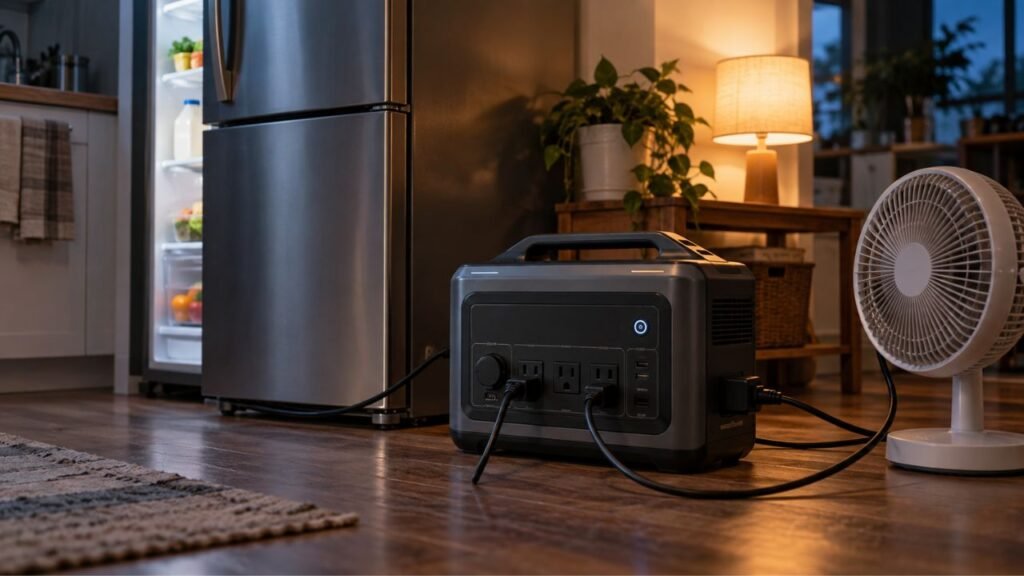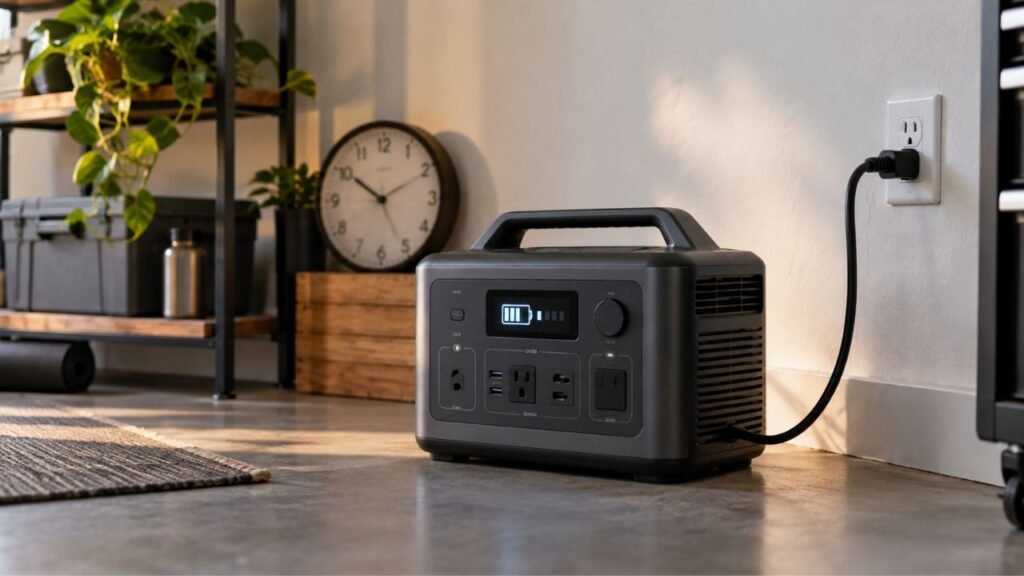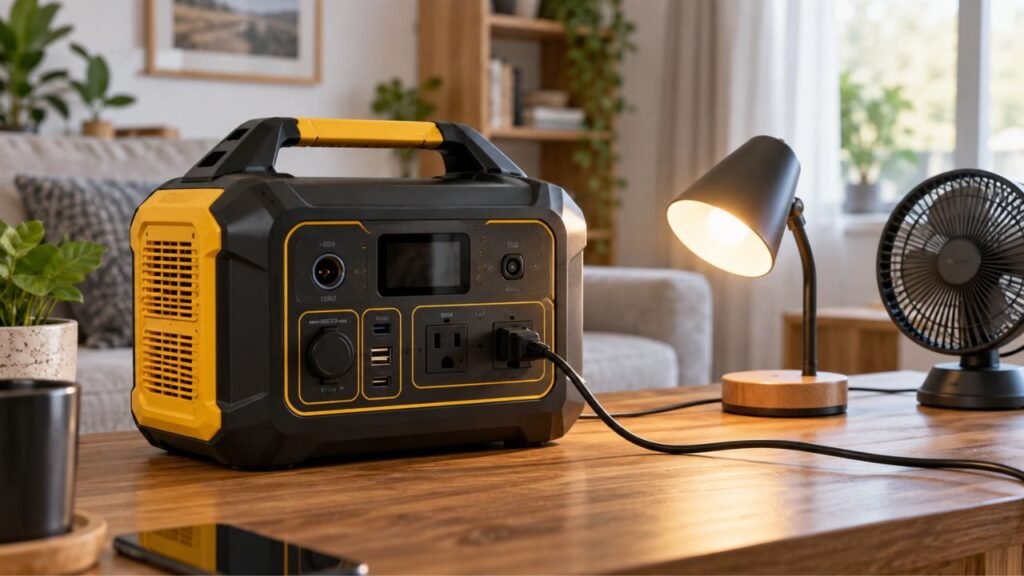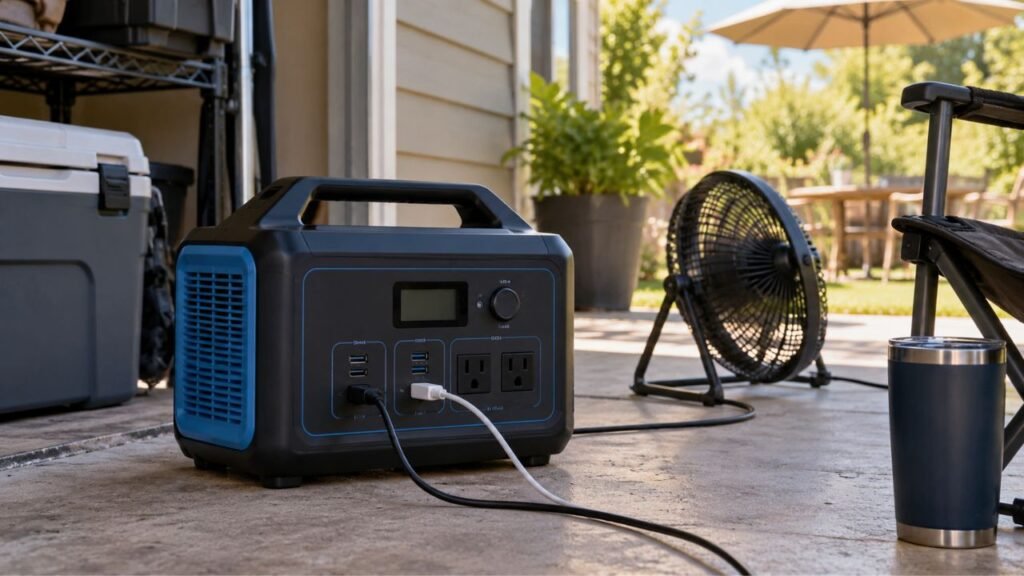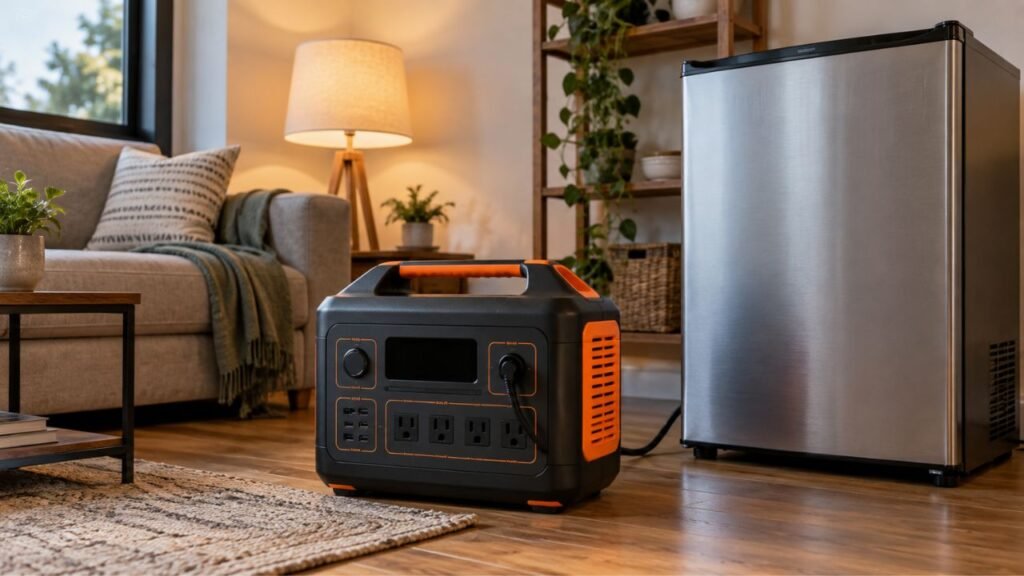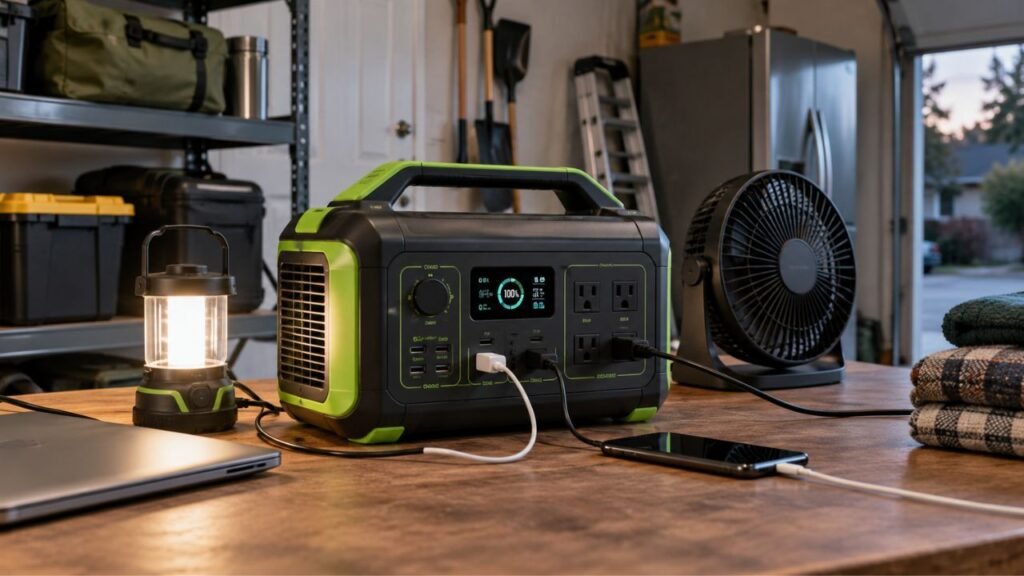
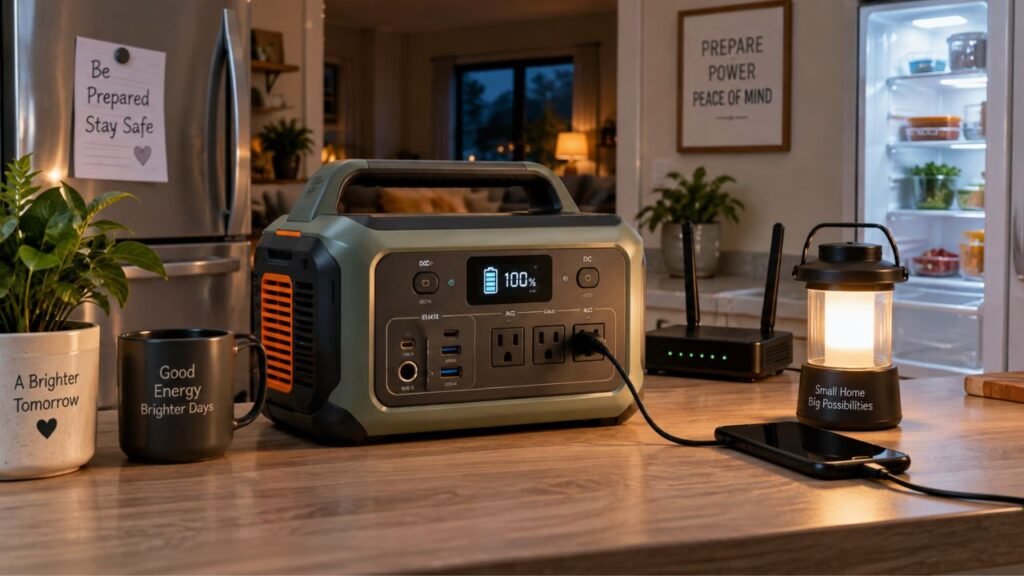
A small house should prioritize portable power station loads by powering medical and life-safety equipment first, followed by communication, essential lighting, weather-related protection equipment, and refrigeration. Work devices and comfort appliances should come later, while high-watt heating and cooking equipment should usually remain off.
The best priority order can change during an outage. I’ll show you how to rank household loads, calculate their energy needs, rotate appliances, manage startup surges, and make your stored battery power last longer.
Key Takeaways
- Power medical and life-safety equipment before convenience appliances.
- Keep phones, emergency communication, and essential lighting available.
- Move sump pumps or heating equipment higher during dangerous weather.
- Do not automatically power your refrigerator immediately after an outage.
- Rotate medium-priority appliances instead of running everything continuously.
- Save high-watt heating and cooking appliances for exceptional situations.
- Consider battery capacity, inverter output, and startup surge separately.
- Keep some stored energy available for unexpected emergency needs.
What Loads Should a Small House Prioritize First?
The easiest approach is ranking each load by what happens if it loses power. A small house does not necessarily have small electrical needs, especially when pumps, refrigeration, heating equipment, or medical devices are involved.
| Priority | Load Category | Common Examples | Best Approach | Why It Matters |
| 1 | Medical and life safety | Medical devices, mobility equipment | Keep powered as required | Health and safety |
| 2 | Communication and safety | Phones, emergency radio, LED lighting | Keep available | Alerts and communication |
| 3 | Weather-dependent protection | Sump pump, furnace blower, essential cooling | Run when conditions require | Protects people and property |
| 4 | Refrigeration | Refrigerator, freezer | Power when temperature requires | Protects food and medicine |
| 5 | Essential household function | Router, laptop, small fan | Rotate or schedule | Work and basic comfort |
| 6 | Convenience | Television, extra lighting, entertainment | Use with surplus capacity | Nonessential use |
| Last | High-draw appliances | Space heater, oven, dryer, water heater | Usually leave off | Rapid battery drain |
This order is a starting point rather than a strict rule.
Weather, medical needs, outage duration, and remaining battery capacity can change the priority very quickly.
Prioritize by Consequence, Not Just by Wattage
Wattage tells you how much power an appliance uses. It does not tell you how important that appliance is.
A 10-watt phone charger uses very little electricity. However, keeping your phone charged might be essential for emergency alerts and communication.
A sump pump can use several hundred watts and require even more starting power. During dry weather, it might remain completely unnecessary.
During heavy rainfall, that same pump can suddenly become one of your highest priorities.
Your refrigerator presents another good example. Food preservation matters, but your refrigerator does not necessarily need electricity immediately after the grid goes down.
Before powering anything, ask four questions.
What happens if this appliance remains off?
How soon will that become a problem?
How much stored energy will the appliance consume?
Can I delay, cycle, or shorten its operating time?
Those questions create a much better backup plan than simply powering the smallest appliances first.
Priority 1: Protect Medical and Life-Safety Loads
Medical equipment should receive your first available backup power when someone depends on that equipment. However, never assume every medical device can safely operate from any portable power station.
Verify the Device’s Exact Power Requirements
Check the device label, manual, manufacturer specifications, or equipment provider.
You need to know its voltage, running watts, operating time, and any special power requirements.
Some medical equipment also includes heaters, humidifiers, compressors, or charging systems that increase energy consumption.
For example, a CPAP machine may use considerably more electricity when its humidifier or heated tubing operates.
An oxygen concentrator may also behave differently from smaller electronic equipment.
Do not estimate critical medical runtime using wattage alone when someone’s health depends on it.
Test the actual setup before an emergency whenever possible.
Do Not Depend on One Portable Power Station
A portable power station should be part of a medical backup plan, not the entire plan.
Know how long your equipment can operate from the available battery.
Also identify approved internal batteries, replacement batteries, additional power sources, and emergency contacts.
Consider what happens if the outage lasts longer than expected.
A backup plan should include somewhere to relocate if your required equipment cannot remain powered.
That becomes especially important during widespread or multi-day outages.
Priority 2: Keep Communication and Basic Lighting Available
Communication equipment and LED lighting provide excellent value because they usually consume little energy. Keep these available while avoiding unnecessary devices.
- Keep smartphones charged for calls, alerts, and emergency information.
- Use an emergency radio when cellular or internet service becomes unreliable.
- Run your modem and router only when internet service remains available.
- Use LED lamps instead of lighting every room.
- Keep rechargeable flashlights ready for nighttime movement.
- Turn unused lights off when nobody needs them.
- Charge tablets only when they serve an important communication purpose.
You rarely need your entire house brightly illuminated during an outage.
One LED lamp in the living area and another near a hallway can provide plenty of practical lighting.
That strategy preserves far more energy than powering decorative or unnecessary lights.
Priority 3: Move Weather-Dependent Home Protection Loads Up the List
Your priority list should respond to conditions outside the house. Weather can turn an ordinary appliance into an important safety or property-protection load.
Sump Pump During Heavy Rain or Flood Risk
A sump pump may sit unused throughout a normal outage.
During severe rain, however, losing that pump could lead to basement flooding and expensive damage.
That makes the sump pump a higher priority than televisions, computers, or even refrigeration in some situations.
Check the pump’s running watts and startup surge before connecting it.
Motors often require significantly more power during startup than normal operation.
Your portable power station must handle both requirements.
Also remember that a pump might cycle frequently during heavy rainfall.
That can consume much more battery energy than its wattage label suggests.
Gas Furnace Blower During Freezing Weather
A gas furnace still depends on electricity.
Its control board, ignition system, and blower normally require electrical power before the furnace can heat your house.
During dangerously cold weather, the furnace blower may deserve much higher priority.
It could become more important than internet access, entertainment, or immediate refrigerator operation.
Before planning to run your furnace, determine its electrical requirements.
Some furnaces connect directly to household circuits instead of using standard plugs.
Never improvise unsafe wiring connections between the furnace and power station.
Use properly installed equipment designed for backup power when powering household circuits.
Cooling During Extreme Heat
Cooling priorities also change during extreme heat.
A small fan usually provides much better battery efficiency than an air conditioner.
Fans often consume relatively little power while improving comfort considerably.
Window air conditioners can require hundreds or thousands of watts, depending on size.
They may also produce significant compressor startup surges.
A large portable power station might operate one suitable window unit.
However, you should calculate both power demand and expected runtime first.
Do not drain your entire battery on cooling without considering other essential loads.
Well Pump or Other Essential Water Loads
Homes using private wells may lose running water during an outage.
Well pumps can require substantial starting power and may operate at 120V or 240V.
Many smaller portable power stations provide only 120V AC output.
That means having enough stored watt-hours does not guarantee compatibility.
Confirm your pump voltage, running wattage, startup requirements, and connection method before treating it as a backup load.
Priority 4: Decide When the Refrigerator and Freezer Actually Need Power
Your refrigerator is important, but it does not always need immediate electricity.
When grid power fails, keep refrigerator and freezer doors closed.
An unopened refrigerator can generally keep food cold for about four hours.
A full freezer can remain cold for roughly 48 hours when unopened.
A half-full freezer may remain cold for around 24 hours.
That gives you time to protect higher-priority loads first.
Use appliance thermometers whenever possible.
They tell you much more than an arbitrary schedule.
I would not recommend automatically running your refrigerator for 15 minutes every hour.
Refrigerators vary widely in compressor size, insulation, room temperature, thermostat settings, food load, and cycling behavior.
Instead, watch the refrigerator temperature and power it when needed.
Try to minimize door openings while the grid remains unavailable.
Once the compressor starts, allow it to complete a normal cooling cycle when possible.
Repeatedly switching power on and off can produce unnecessary startup events.
A refrigerator also requires extra power briefly when its compressor starts.
Make sure your power station has enough surge capacity.
Food safety should remain the goal, not simply keeping the appliance powered continuously.
Priority 5: Add Internet, Work, and Comfort Loads When Capacity Allows
Once critical needs are protected, you can gradually add low-power household equipment. Choose loads that provide meaningful value without consuming your reserve quickly.
- Run your Wi-Fi router if internet service remains available.
- Charge a laptop instead of running a large desktop computer.
- Use one monitor instead of several displays.
- Run an efficient fan when additional airflow helps.
- Charge small electronics during planned periods.
- Limit television use during longer outages.
- Disconnect unnecessary chargers after devices finish charging.
Your personal circumstances also matter.
Someone working remotely may consider internet service very important.
During a normal short outage, the router might therefore rank quite high.
During flooding, the sump pump should probably move ahead of it.
During freezing weather, furnace operation may become more important.
The priority list should always reflect the immediate problem.
Which Loads Should Usually Be Last Priority?
Some appliances consume stored battery energy so quickly that they should normally stay off. Many create heat, which requires large amounts of electricity.
- Space heaters
- Electric water heaters
- Electric ovens
- Electric ranges
- Clothes dryers
- Hair dryers
- Toaster ovens
- Large electric cooktops
- Large central air conditioners
- High-powered shop tools
- Large microwaves
- Electric vehicle charging
A portable power station may technically run some of these appliances.
That does not necessarily mean running them makes sense.
Consider a 1,500-watt space heater.
Running it for one hour can require around 1,500Wh before considering conversion losses.
That could consume most of the usable energy from many common portable stations.
Compare that with LED lighting, phone charging, and a router.
Those smaller loads could potentially operate for many hours using the same stored energy.
During an outage, think about energy value rather than inverter capability alone.
Separate Loads Into Always-On, Scheduled, and Off Categories
A simple three-category system makes load management much easier. You can create this list before storm season and adjust it when conditions change.
Always-On or Always-Available Loads
These are devices you cannot reasonably delay.
Required medical equipment belongs here.
Essential safety equipment might also remain continuously powered.
Communication equipment does not necessarily need constant operation, but it should stay available when required.
Keep this group as small as possible.
Every continuous load reduces how long your stored energy lasts.
Scheduled or Rotating Loads
This category can save enormous amounts of battery capacity.
Possible rotating loads include:
Refrigerators, freezers, laptops, routers, fans, pumps, and selected household equipment.
Instead of operating everything simultaneously, run each appliance when necessary.
For example, charge laptops while the refrigerator compressor is not running.
You might temporarily switch off another medium load before using a microwave.
Scheduling also reduces the chance of several motors starting simultaneously.
Off Until Extra Capacity Is Available
Entertainment equipment belongs here during most emergency situations.
Extra televisions, gaming systems, decorative lighting, and convenience appliances should remain disconnected.
You can gradually add them when the outage appears short and battery capacity remains high.
During extended outages, leaving them off gives essential equipment more runtime.
How Should Priorities Change as an Outage Gets Longer?
The best load plan at hour one might look completely different at hour twelve. Think of your battery strategy as something that changes as the outage develops.
First 0-4 Hours
Focus on immediate safety.
Keep medical devices powered when necessary.
Maintain communication and basic lighting.
Watch weather conditions and protect your house from immediate risks.
You usually do not need to power your refrigerator immediately.
Keep its door closed and preserve your battery.
Avoid using high-watt comfort appliances simply because plenty of battery remains.
You still do not know how long the outage will last.
About 4-12 Hours
Start thinking more carefully about refrigeration.
Monitor refrigerator temperatures and power cooling equipment when necessary.
Continue protecting medical and weather-related needs.
Reduce unnecessary lighting and entertainment.
If you’re working from home, schedule laptop and router use.
Avoid leaving electronics powered continuously when nobody needs them.
Overnight to 24 Hours
Energy conservation becomes much more important.
You now need to think about overnight medical loads, heating, cooling, refrigeration, communication, and morning requirements.
Establish a battery reserve instead of using everything available.
Rotate medium-priority appliances.
Turn off unused AC outputs when practical because an active inverter may consume some energy even without a large connected load.
If recharging is unavailable, become more conservative.
Multi-Day Outage
A multi-day outage changes the entire strategy.
You are no longer simply consuming stored electricity.
You need a daily energy budget and a dependable recharging plan.
Solar charging may help when sunlight and panel conditions are suitable.
Vehicle charging may provide another option when supported.
Additional batteries can expand available capacity.
A properly operated generator may also recharge compatible power stations or supply larger loads.
Your load priorities should now reflect how much energy you can realistically replace each day.
How Do You Calculate the Energy Budget for Priority Loads?
You do not need complicated electrical calculations to create a useful backup plan. Start with running watts, expected operating time, and your power station’s usable capacity.
Find Each Device’s Running Watts
Check the appliance label or owner’s manual first.
Manufacturer specifications can also provide the normal operating wattage.
For more accurate planning, a plug-in electricity meter can measure actual consumption from compatible plug-in appliances.
Real measurements are particularly useful for refrigerators and other cycling appliances.
Write each device’s normal wattage beside its priority level.
Estimate Real Operating Time
The basic calculation is straightforward:
Watts × Hours = Watt-Hours
Suppose an LED lamp uses 10 watts.
Running it for five hours requires about:
10W × 5 hours = 50Wh
A 20-watt router running for eight hours would require:
20W × 8 hours = 160Wh
A 100-watt device operating for five hours would require:
100W × 5 hours = 500Wh
These are theoretical device requirements.
Your power station will normally consume slightly more stored energy because conversion is not perfectly efficient.
Account for Cycling Appliances
Do not calculate every appliance as if it runs continuously.
A refrigerator compressor usually switches on and off.
A sump pump runs only when water reaches its activation level.
A furnace blower cycles according to heating demand.
Because cycling patterns change, daily energy consumption can vary considerably.
Measuring actual appliance energy use over several hours provides better estimates.
When measurement is impossible, plan conservatively.
Check Startup Surge Separately
Battery capacity cannot solve every power problem.
Motor-driven appliances can demand much higher wattage during startup.
Refrigerators, freezers, pumps, and air conditioners are common examples.
Suppose your refrigerator uses 150 watts while running.
Its compressor may briefly require several times that amount during startup.
Your power station must support that temporary surge.
Otherwise, it may overload and shut down even with a full battery.
Keep Some Capacity in Reserve
Avoid planning your battery down to zero.
Outages frequently last longer than expected.
Temperatures change.
Appliances cycle more frequently.
You might suddenly need additional lighting, communication, heating, or medical equipment.
Keeping some capacity untouched provides flexibility.
There is no universal reserve percentage for every household.
However, your plan should leave enough energy for unexpected essential needs.
Don’t Confuse Battery Capacity With Inverter Output
Battery capacity and inverter output answer two completely different questions.
Watt-hours (Wh) tell you how much stored energy is available.
Watts (W) tell you how much power the station can deliver at once.
Surge watts tell you whether it can briefly support demanding startup loads.
Imagine a power station contains 2,000Wh of battery capacity.
That does not automatically mean it can run any 2,000-watt appliance.
Its inverter might provide only 1,500 watts continuously.
The opposite problem can also happen.
A station might include a powerful inverter but relatively modest battery capacity.
It could successfully run a large appliance but drain very quickly.
Always check energy capacity and output limits separately.
Avoid Running Several Motor Loads at the Same Time
Simultaneous startup is an easy way to overload a portable power station.
Imagine your refrigerator compressor starts while your sump pump begins running.
At the same moment, another compressor or motor starts.
Their combined startup demand may exceed the station’s surge limit.
You can reduce this risk by staggering loads.
Allow one motor-driven appliance to start before connecting another major device.
Watch the power station’s display when available.
Many units show real-time output wattage.
That information helps you understand how close you are to the inverter limit.
Also leave some output headroom.
Operating continuously at the exact maximum rating gives you little room for unexpected surges.
How Does Recharging Change Your Load Priorities?
Available recharging can completely change how aggressively you conserve energy.
Imagine your power station stores 2,000Wh.
If no charging source will become available, those 2,000Wh represent your entire energy budget.
Every unnecessary appliance directly reduces your remaining emergency runtime.
Now imagine you can reliably recover several hundred watt-hours daily.
You have more flexibility.
You might operate your router longer, charge laptops more frequently, or use additional lighting.
Still, never assume solar panels will always produce their full advertised wattage.
Clouds, shade, panel temperature, sun angle, season, cable losses, and limited daylight can reduce charging.
Treat expected solar production conservatively during emergency planning.
When the weather forecast looks poor, protect more battery capacity.
When charging performance is strong, you can gradually loosen your restrictions.
Small-House Portable Power Station Load-Priority Example
Let’s look at a small home with several common electrical loads. Exact wattages vary, so these numbers are only examples for understanding the priority process.
| Appliance | Example Demand | Priority | Recommended Strategy |
| Two phones | Very low | High | Charge when needed |
| LED lights | Very low | High | Use only essential lights |
| Wi-Fi router | Low | Medium-high | Run when internet is useful |
| Laptop | Low-medium | Medium | Charge during scheduled periods |
| Refrigerator | Medium plus startup surge | High after temperature becomes a concern | Cycle as needed |
| Sump pump | Medium-high plus surge | Situationally critical | Prioritize during heavy rain |
| Gas furnace blower | Medium plus surge | Situationally critical | Prioritize during dangerous cold |
| Television | Low-medium | Low | Limit during long outages |
| Microwave | High | Low | Short occasional use only |
| Space heater | Very high | Very low | Usually avoid |
Mild-Weather Short Outage
Suppose the weather is comfortable and the outage began recently.
Start with medical needs, phones, and essential lighting.
The refrigerator can remain closed initially.
Add the router if internet remains available.
Charge your laptop only when needed.
Leave high-watt appliances disconnected.
This approach conserves battery while you learn whether the outage will last thirty minutes or ten hours.
Thunderstorm With Flooding Risk
Now imagine the same house during severe thunderstorms.
The sump pump moves near the top of your list.
Preventing water damage becomes more urgent than running a television or workstation.
You may also temporarily reduce other loads whenever the sump pump begins cycling frequently.
That gives its motor more available startup power.
Freezing Winter Outage
During dangerous cold, furnace operation can become critical.
A gas furnace may use gas for heat but still needs electricity for its blower and controls.
You might therefore reduce refrigerator, internet, entertainment, and work loads to conserve energy for heating.
However, only connect a furnace through a safe and compatible backup arrangement.
Never improvise a connection to household wiring.
Outage Lasting 24 Hours or Longer
After many hours without grid power, priorities tighten.
Food refrigeration now matters more.
You must also plan for overnight lighting, communication, heating or cooling, medical equipment, and morning needs.
Schedule appliance operation instead of leaving everything connected.
Estimate how much energy remains.
Then compare that amount with your expected recharging options.
This is where an organized load plan becomes much more valuable.
Portable Power Station Safety While Managing Loads
A good load-priority plan should also protect your equipment and household. Follow these basic practices whenever using portable backup power.
- Never exceed the station’s continuous output rating.
- Check startup requirements for refrigerators, pumps, and compressors.
- Follow the portable power station manufacturer’s instructions.
- Keep ventilation openings clear during operation.
- Protect the unit and electrical connections from water.
- Use extension cords rated for the connected load.
- Avoid damaged plugs, cables, and adapters.
- Never backfeed electricity through a household wall outlet.
- Use approved transfer equipment when powering household circuits.
- Have transfer switches or interlocks installed properly.
- Confirm voltage requirements before connecting pumps or appliances.
- Follow device-specific backup instructions for medical equipment.
- Keep the station where children cannot tamper with connections.
- Stop using equipment showing overheating, damage, swelling, or unusual odors.
Portable power stations avoid the exhaust hazards associated with gasoline generators, but electrical and battery safety still matter.
Treat the unit as serious electrical equipment rather than an oversized phone battery.
Conclusion
A small house should prioritize portable power station loads according to consequences rather than appliance size alone. Start with medical and life-safety equipment, then protect communication, basic lighting, and immediate household safety needs.
Move sump pumps, furnace blowers, or cooling equipment higher when weather conditions make them important. Add refrigeration as temperatures require, followed by internet, work devices, and comfort loads.
Keep high-watt heating and cooking equipment near the bottom.
Most importantly, treat your battery as a limited emergency energy budget. Rotate appliances, stagger motor startups, monitor remaining capacity, and adjust priorities as the outage develops.
That approach helps your portable power station protect what actually matters for longer.
Related FAQs
Here are several common questions about prioritizing portable power station loads in a small house.
What Should I Plug Into a Portable Power Station First During an Outage?
Power any required medical or life-safety equipment first, followed by communication devices, basic lighting, and urgent weather-related equipment. Add refrigeration and other household loads once immediate safety needs are covered.
Should I Power My Refrigerator Immediately When the Power Goes Out?
Usually, no. Keep the refrigerator door closed initially because it can generally maintain safe temperatures for several hours. Start powering it when temperature, outage duration, or food-safety conditions make refrigeration necessary.
Should a Refrigerator or Wi-Fi Router Get Priority?
The answer depends on the situation. A router uses far less electricity and supports communication, while refrigeration becomes increasingly important during longer outages. You can often operate the router early and add refrigerator cycles later.
How Much Portable Power Station Capacity Should I Keep in Reserve?
There is no universal reserve amount for every household. Keep enough capacity for unexpected outage extensions, medical needs, communication, nighttime lighting, weather changes, and essential appliances that may require more energy than expected.
Can I Run a Refrigerator and Sump Pump at the Same Time?
Possibly, but check their combined running demand and startup surge first. Both contain motors, so simultaneous startup could exceed your power station’s surge rating even when their normal running watts appear acceptable.
Should I Leave My Wi-Fi Router Running Throughout an Outage?
You can if internet service remains available and battery capacity is sufficient. During longer outages, scheduling router use or switching it off when nobody needs internet can conserve useful energy.
What Household Appliances Use Too Much Power for Backup?
Space heaters, electric water heaters, ovens, ranges, dryers, large air conditioners, and other resistance-heating appliances can consume battery capacity extremely quickly. They should usually remain off during portable power station backup.
Does a Larger Portable Power Station Eliminate the Need to Prioritize Loads?
No. A larger station gives you more capacity, but outages can still last longer than expected. High-watt appliances can drain even large batteries quickly, so load prioritization remains important for dependable backup power.

Warren Turner writes practical guides and reviews on generators, portable power stations, and battery backup systems. He focuses on real-world performance, everyday power needs, and helping readers choose dependable equipment without unnecessary complexity.