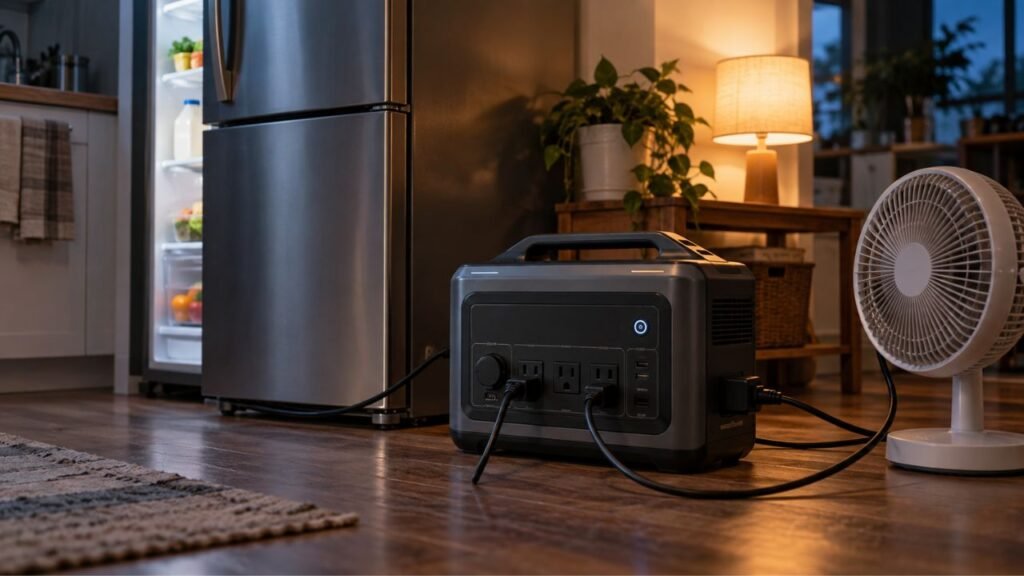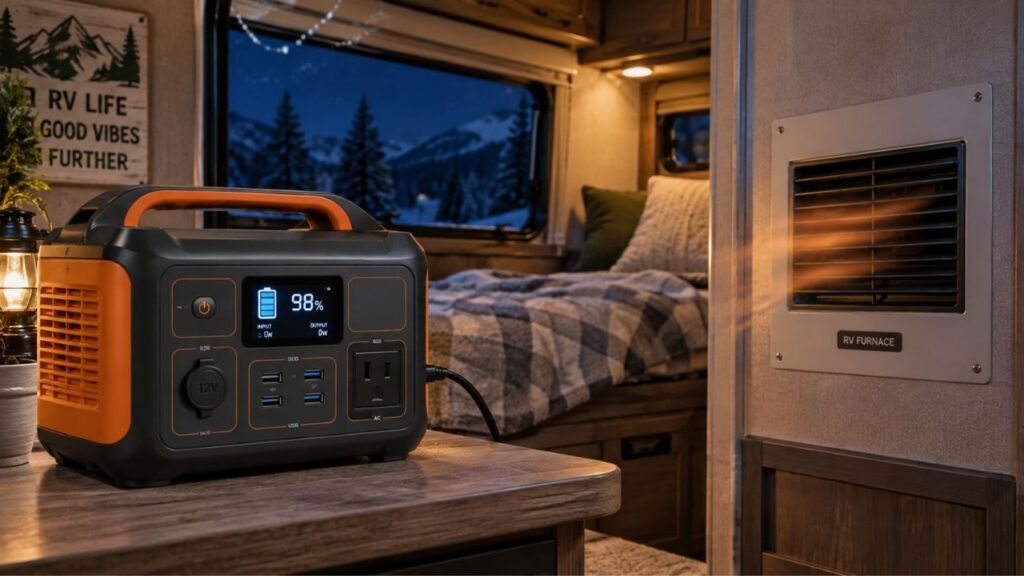
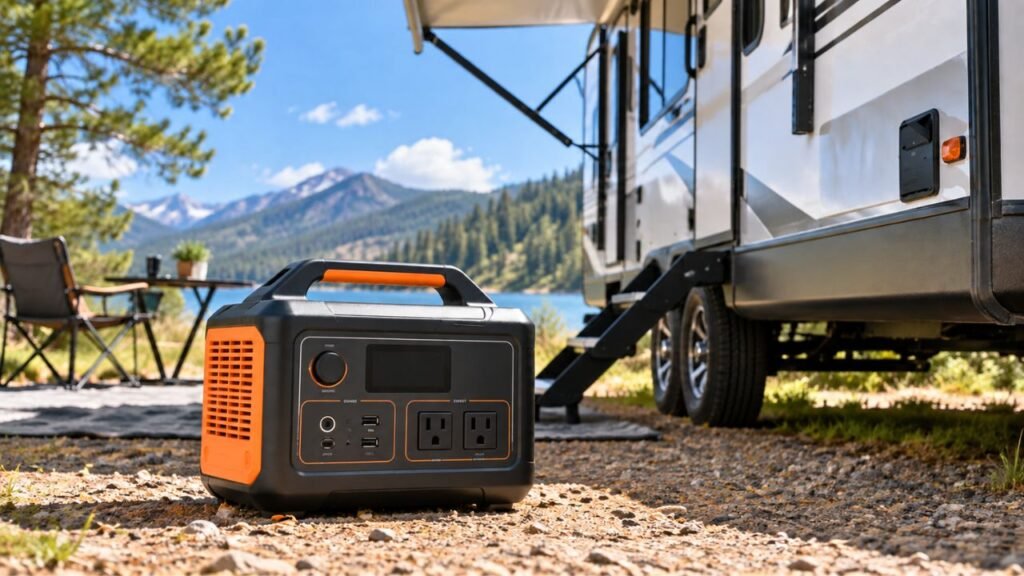
An RV converter can waste portable power station capacity because energy gets converted twice. The station changes stored DC power into 120V AC. Then, the RV converter changes some AC power back into 12V DC.
This extra conversion becomes especially noticeable when the converter charges your RV battery unnecessarily. Below, I’ll explain where those watt-hours go and how you can reduce the drain.
Key Takeaways
- Portable power stations store energy as direct current, or DC.
- Their inverter changes DC electricity into usable 120V AC power.
- Your RV converter changes part of that AC back into DC.
- Every conversion step loses some energy through heat and electronics.
- Battery charging can create an additional load on the power station.
- Turning off the converter can help when conditions allow safely.
- Your RV battery should still support required 12V equipment.
Why Does an RV Converter Waste Portable Power Station Capacity?
Your RV converter is not naturally a wasteful or unnecessary component. The problem comes from the route electricity takes during portable power station use.
A portable power station stores electricity inside a DC battery. When you connect your RV shore cord, its inverter produces 120V AC power.
That AC electricity then enters your RV electrical distribution system.
Your RV converter takes some of that 120V AC electricity. It changes the electricity back into lower-voltage DC power.
That DC power can operate 12V equipment and recharge house batteries.
So, you can end up with this power path:
Power station battery → inverter → 120V AC → RV converter → 12V DC
Every conversion uses a little energy during the process.
Things become less efficient when the converter charges another battery unnecessarily. You are essentially moving stored energy from one battery into another.
That setup may be convenient, but convenience can shorten your runtime.
Where Does the Portable Power Station Energy Actually Go?
Several different losses can occur before your stored energy reaches RV equipment. Understanding each stage makes the problem much easier to manage.
The Power Station Converts DC Into AC
Your portable power station contains a large DC battery.
However, your RV shore connection expects standard 120V AC electricity. Therefore, the station’s inverter must create AC power before supplying the RV.
An inverter cannot perform this conversion with perfect efficiency.
Some stored energy becomes heat inside electronic components. Cooling systems and inverter electronics can also consume small amounts.
Efficiency also changes depending on the load.
A lightly loaded inverter may behave differently from one near capacity.
That means there is no single efficiency percentage for every setup.
The RV Converter Changes AC Back Into DC
Next, AC power enters your RV through its shore connection.
The converter receives that AC power and creates low-voltage DC electricity. Your lights, water pump, furnace controls, and other systems may use it.
Again, this conversion is not perfectly efficient.
Some electricity becomes heat instead of useful output power.
You have now converted battery DC into AC, then AC into DC.
That extra step is where much of the avoidable loss occurs.
Charging the RV House Battery Uses More Energy
The converter commonly doubles as an RV battery charger.
When your house battery needs charging, this function is useful.
However, problems start when you expected the portable station only to run AC equipment.
The station may quietly be charging your RV battery simultaneously.
The complete path may then look like this:
Power station battery → inverter → converter → RV house battery
You are transferring energy between two battery systems through AC electricity.
That process creates losses at multiple stages.
It can also consume far more power when the house battery starts discharged.
Inverters and Converters Have Background Consumption
Power electronics also consume some energy while operating.
An inverter needs electricity to remain active and create AC output.
Converters contain electronic components that operate whenever their circuit receives power.
Cooling fans may also run when temperature or charging demand increases.
These individual loads can appear small.
However, they matter during long overnight or boondocking sessions.
A 10-watt unnecessary load running ten hours consumes 100Wh.
With smaller power stations, that becomes meaningful usable capacity.
How Much Portable Power Station Capacity Can the Converter Waste?
There is no universal percentage because every electrical system behaves differently.
However, you can estimate conversion losses using basic efficiency math.
A simplified calculation looks like this:
Usable DC energy = Station capacity × inverter efficiency × converter efficiency
Imagine a 1,000Wh portable power station.
Suppose its inverter operated at 90% efficiency.
Then assume your RV converter operated at 85% efficiency.
The calculation becomes:
1,000Wh × 0.90 × 0.85 = 765Wh
In this simplified example, about 765Wh reaches the DC output side.
Around 235Wh disappeared through the two conversion stages.
That does not mean every RV loses exactly 235Wh per 1,000Wh.
Your real number could be higher or lower.
Several factors affect the final result:
- Portable power station inverter efficiency
- RV converter efficiency
- Current electrical load
- House battery state of charge
- Battery charging profile
- Wiring resistance
- Inverter standby consumption
- Cooling fan operation
The important takeaway is simple.
Efficiency percentages multiply together when electricity passes through several devices.
When Does the RV Converter Waste the Most Capacity?
Converter losses become much more noticeable under certain operating conditions. These situations are worth watching when battery runtime matters.
When Your House Battery Is Already Nearly Full
A nearly full RV battery does not need major charging.
However, your converter may still remain active while shore power exists.
It can maintain the battery and supply portions of the 12V system.
That might be perfectly normal under campground shore power.
With limited portable power, every unnecessary watt matters more.
If your house battery can already handle 12V loads, charging it again may provide little benefit.
When You Mainly Need 120V RV Outlets
Suppose you connect your portable station for a television or laptop.
You might also want several wall outlets available around the RV.
Plugging your entire RV into the station makes that convenient.
Unfortunately, it can also turn the converter on automatically.
Now the station powers your chosen AC devices and your converter.
That extra charging load shortens runtime without helping your AC equipment.
When a Large Converter Starts Bulk Charging
This can create a surprisingly heavy portable power station load.
Imagine connecting the RV after heavily discharging the house battery overnight.
The converter detects the low battery and begins charging aggressively.
A high-output converter can then draw substantial AC wattage.
Your power station display may suddenly show hundreds of watts.
You might think some hidden appliance is running.
In reality, much of that power could be charging the house battery.
When You Use a Smaller Portable Power Station
Unnecessary losses matter much more with limited storage capacity.
Losing 150Wh from a 700Wh station is very noticeable.
The same loss feels smaller with a 4,000Wh expandable system.
Smaller stations therefore benefit most from careful load management.
Converter On or Off? Quick RV Power Guide
The right converter setting depends on how your RV electrical system works. Use this table as a practical starting point.
| Situation | Converter Setting | Why |
| Power station feeds RV and house battery is healthy | Usually off | Prevents unnecessary battery charging |
| RV house battery needs charging | On | Charging is intentional |
| House battery handles normal 12V loads | Usually off | Avoids unnecessary DC-to-AC-to-DC conversion |
| House battery cannot power 12V equipment | May need on | Converter may supply required DC power |
| RV uses normal campground shore power | On | This is normal converter operation |
| Devices plug directly into the power station | Not relevant | RV converter is bypassed |
| You do not know your RV wiring | Verify first | Electrical systems vary between RVs |
Always consider your specific RV design before changing normal electrical operation.
Battery disconnect switches, converter circuits, solar systems, and inverter systems can behave differently.
Should You Turn Off the RV Converter When Using a Portable Power Station?
In many cases, yes.
Turning off the converter can conserve energy when your portable station powers the RV shore connection.
However, your house battery must still support necessary 12V equipment.
A common setup works like this:
Your portable station powers selected 120V RV circuits.
Meanwhile, your RV house battery handles normal 12V equipment.
With the converter disabled, the station does not continually recharge that battery.
This arrangement avoids an unnecessary DC-to-AC-to-DC conversion path.
However, do not treat this as a universal rule.
Some RV systems rely more heavily on converter output than others.
Always confirm that essential 12V systems continue working properly.
What Happens If You Turn the Converter Breaker Off?
Turning off the converter does not necessarily shut down your RV. Different parts of the electrical system can continue receiving power.
Your 120V Outlets Can Still Work
Your converter normally occupies its own AC circuit.
Turning that breaker off should not automatically disable every 120V outlet.
Your power station can continue feeding other active AC branch circuits.
However, total wattage must remain below the station’s inverter rating.
Your 12V Loads Should Use the House Battery
Many RV systems normally operate from 12V DC electricity.
Common examples include:
- Interior LED lights
- Water pump
- Vent fans
- Furnace controls
- Furnace blower
- Refrigerator controls
- Water heater controls
- Monitoring panels
With the converter off, a healthy house battery usually supplies these loads.
Your RV Battery Stops Charging From the Station
This is usually the main goal.
Disabling the converter prevents portable station energy from automatically recharging the RV battery.
You keep more watt-hours available for selected AC loads.
Some RVs May Behave Differently
Do not assume every RV follows exactly the same wiring layout.
Some electrical systems may behave unexpectedly when the converter is disabled.
For example, battery disconnect arrangements can change how DC circuits receive power.
Test your setup before depending on it during an emergency.
How to Reduce Converter Loss When Using a Portable Power Station
You can reduce unnecessary losses without rebuilding your entire RV electrical system. Start with the easiest adjustments before considering equipment upgrades.
Turn Off the Converter Breaker When Appropriate
Locate the converter breaker inside your RV’s normal electrical panel.
It may be labeled converter, charger, or something similar.
Switch it off only when your RV battery can support DC equipment.
You should not remove electrical panel covers or touch internal wiring.
Let the RV House Battery Handle 12V Loads
Your RV already has a battery designed for low-voltage equipment.
Letting it handle those loads avoids unnecessary conversion through the station.
Your power station can then focus on AC appliances and electronics.
Plug Devices Directly Into the Power Station
You do not always need to energize the entire RV.
For example, plug these devices directly into the station when practical:
- Laptop charger
- Phone charger
- Tablet
- Television
- Small fan
- Coffee equipment
- Other small appliances
This approach can avoid powering unnecessary RV circuits.
Use Direct DC Output When Practical
Some portable stations include regulated DC outlets.
Direct DC operation can avoid the inverter stage completely.
However, never connect devices simply because plugs appear compatible.
Voltage, current capacity, polarity, connectors, and fusing all matter.
Always follow equipment specifications.
Charge the RV Battery Only When Needed
Battery charging is not waste when you actually need stored energy.
The goal is avoiding unnecessary charging.
If your house battery drops significantly, turning the converter back on makes sense.
You can intentionally move energy from the portable station into that battery.
Use Solar or Vehicle Charging Strategically
Your RV battery and portable station do not always need charging together.
Solar panels may replenish one system while another supplies loads.
Vehicle charging can also become useful during travel.
Separating those charging jobs can improve overall energy management.
Is a DC-to-DC Charger Better Than the RV Converter?
A DC-to-DC charger can sometimes provide a more direct charging path.
Instead of creating 120V AC first, compatible equipment may transfer DC electricity directly.
That can reduce unnecessary conversion stages.
However, DC-to-DC charging is not automatically better for every RV.
Your power station must provide suitable DC output.
The charger must also match the battery voltage and chemistry.
Current limits become especially important.
Many portable station DC outlets provide far less power than AC outputs.
You also need correct wiring and overcurrent protection.
For simple setups, using the existing converter may remain more practical.
Does a 30-Amp RV Adapter Cause the Capacity Loss?
Usually, no.
The adapter itself is not the main reason your station drains quickly.
A 30-amp adapter simply allows compatible plugs and receptacles to connect.
The bigger issue is what gets energized afterward.
Once the RV receives AC power, several loads may automatically become active.
Those loads can include:
- RV converter
- Battery charger
- Refrigerator heating element
- Electric water heater
- Other standby equipment
The adapter does not eliminate inverter or converter losses.
Also, a TT-30 connection does not magically provide 30 amps.
Your available output remains limited by the portable station.
For example, a 2,000-watt inverter cannot provide traditional 3,600-watt 30A shore capacity.
The RV plug type does not increase the inverter’s power rating.
How Can You Tell Whether Your Converter Is Draining the Power Station?
You can test this without complicated electrical equipment.
- Check your RV house battery state of charge.
- Turn off major appliances inside the RV.
- Connect the portable station to the RV shore inlet.
- Check the station’s displayed AC output wattage.
- Wait briefly for the reading to stabilize.
- Identify the breaker labeled for the converter.
- Turn that breaker off when appropriate.
- Check the power station’s output again.
- Confirm important 12V equipment still operates normally.
Suppose the station initially shows 420 watts.
After disabling the converter, it drops to 80 watts.
That large difference strongly suggests battery charging caused much of the load.
A small difference may mean your battery was already nearly charged.
This simple test shows what your own RV actually does.
When Should You Leave the RV Converter On?
Turning the converter off is not always the right choice.
Leave it operating when:
- Your RV house battery genuinely needs charging.
- The converter is needed for essential 12V equipment.
- Your house battery is disconnected or unavailable.
- Your RV manufacturer requires converter operation.
- Your particular electrical system depends on its output.
- You are using normal campground shore power.
- Energy conservation is less important than battery charging.
Think of the converter as a tool.
You want it operating when its job provides real value.
Does Battery Type Affect Converter Power Consumption?
Different battery chemistries can change how long and how heavily converters operate. Battery condition and charging profile also influence portable station drain.
Lead-Acid Batteries
Lead-acid batteries usually charge through several stages.
Charging current may gradually decrease as the battery approaches full capacity.
A heavily discharged battery can keep the converter busy for hours.
Older batteries may also charge less efficiently than healthier ones.
LiFePO4 Batteries
Lithium iron phosphate batteries often accept high charging current efficiently.
They may continue accepting significant current during much of the charging cycle.
That means a compatible high-output converter can draw considerable AC power.
The portable station may therefore discharge faster during lithium charging.
That does not mean lithium batteries are inefficient overall.
It simply means they may accept available charging power aggressively.
Converter Compatibility Matters
Your converter needs the correct charging profile for your battery.
A converter designed only for traditional lead-acid charging may not suit lithium batteries.
Some modern converters automatically detect different battery chemistries.
Others use switches or separate charging modes.
Always confirm compatibility before changing your RV battery type.
Other RV Loads That Can Look Like Converter Waste
Sometimes the converter gets blamed when another appliance causes the drain.
Check these common hidden loads:
- Electric water heater element
- Absorption refrigerator running on electricity
- Tank heaters
- Battery heating pads
- Built-in inverter or inverter/charger
- Air conditioner
- Residential refrigerator
- Television
- Microwave standby electronics
- Entertainment equipment
- Heated flooring
- Other plugged-in accessories
An electric water heater deserves special attention.
It can consume well over 1,000 watts while heating.
That will empty many portable power stations surprisingly quickly.
Check your active loads before assuming the converter caused everything.
Best Setup for Conserving Portable Power Station Capacity
For many RV owners, separating AC and DC jobs works efficiently.
A simple arrangement looks like this:
RV house battery → normal 12V RV equipment
Portable power station → selected 120V equipment
RV converter → off unless battery charging is needed
This prevents the station from continually moving energy into another battery.
You also retain convenient use of your RV’s existing DC system.
However, plugging the entire RV into the station can still be convenient.
You may want built-in outlets available throughout the rig.
In that case, disable unnecessary loads instead of bypassing the RV completely.
Common Mistakes When Using a Portable Power Station With an RV
Avoid these common problems when trying to extend station runtime:
- Leaving the converter operating without realizing it.
- Connecting the RV with a heavily discharged house battery.
- Assuming rated battery capacity equals usable AC energy.
- Using one fixed efficiency percentage for every system.
- Assuming a TT-30 outlet guarantees 30 amps.
- Forgetting the electric water heater is enabled.
- Leaving an absorption refrigerator in electric mode.
- Turning off the converter without checking 12V equipment.
- Confusing an RV converter with an inverter.
- Assuming the battery disconnect controls the converter.
- Ignoring small standby loads during long overnight use.
Small mistakes can become large energy losses over several hours.
Conclusion
An RV converter can reduce portable power station runtime through extra energy conversions.
The station creates AC electricity, then the converter changes some back into DC.
More energy gets consumed when that converter also charges the house battery.
The best solution is not simply turning everything off.
Instead, decide which battery system should handle each electrical job.
Use your RV battery for 12V loads when appropriate.
Let the portable station handle selected AC loads.
Then run the converter only when its charging function is actually useful.
Related FAQs
Does an RV Converter Draw Power When the Battery Is Full?
Yes, an RV converter can still consume some power when connected. However, a modern charger should reduce charging current as the battery reaches full charge.
Should I Turn Off My RV Converter When Boondocking?
You can often turn it off when using a portable station for AC power. Make sure your house battery still supplies necessary 12V equipment.
Can I Plug My RV Into a Portable Power Station With the Converter Off?
Yes, in many RVs you can still power normal AC circuits. The house battery should then supply the RV’s 12V electrical loads.
Will My RV Lights Work With the Converter Turned Off?
Usually, yes, because most RV lights operate from the 12V house battery. They may stop working if the battery is disconnected or depleted.
How Many Watts Does an RV Converter Use?
Converter consumption depends on its size and charging demand. A deeply discharged battery can make a large converter draw substantial AC power.
Does an RV Converter Drain the House Battery?
Normally, no. A converter receives AC electricity and supplies DC power while charging the house battery rather than draining it.
Can I Turn Off the Converter Breaker and Still Use RV Outlets?
Usually, yes. Most AC outlets are on separate branch circuits. However, verify your RV’s electrical panel because wiring arrangements vary.
Is It Better to Plug Appliances Directly Into the Power Station?
Sometimes. Direct connections can prevent unnecessary RV circuits from becoming energized. This approach works especially well for small electronics and individual appliances.
Does a 30-Amp RV Converter Use 30 Amps?
Not necessarily. Converter amperage ratings usually describe DC output current. They do not mean the converter continuously draws 30 amps from 120V AC.
Can a Portable Power Station Charge an RV House Battery?
Yes. You can often charge the house battery through the RV converter. Just remember that conversion losses reduce overall portable station efficiency.

Warren Turner writes practical guides and reviews on generators, portable power stations, and battery backup systems. He focuses on real-world performance, everyday power needs, and helping readers choose dependable equipment without unnecessary complexity.