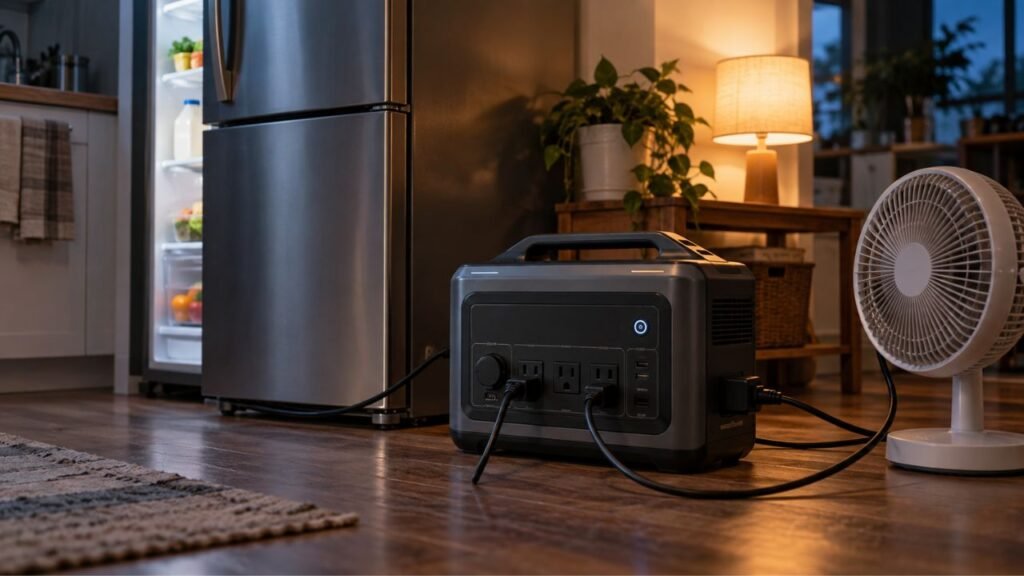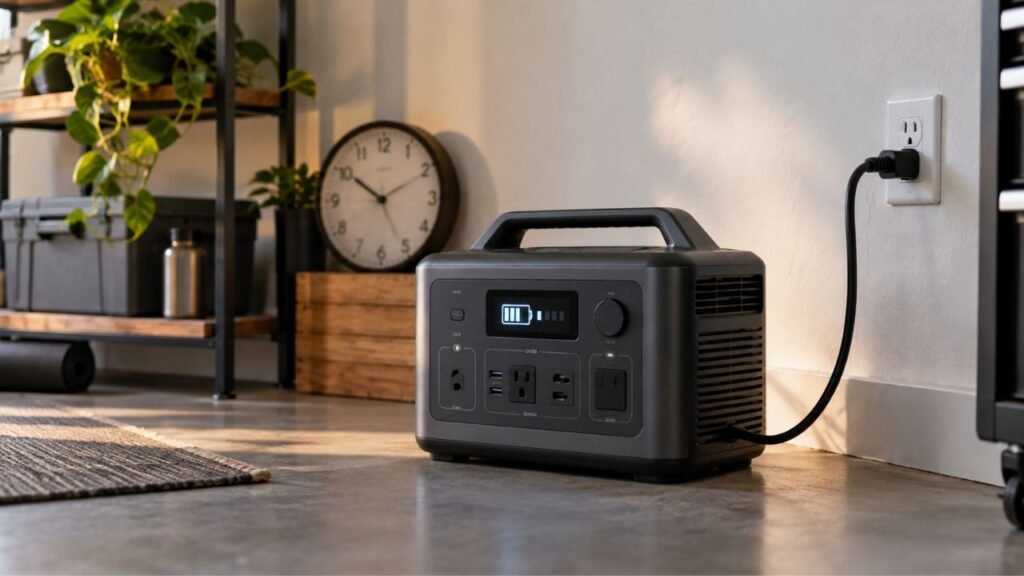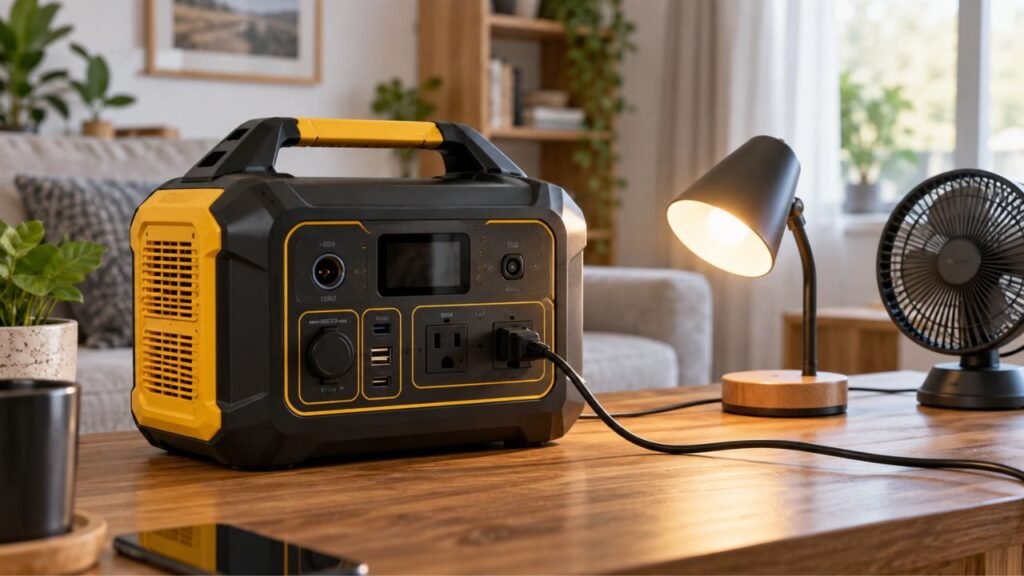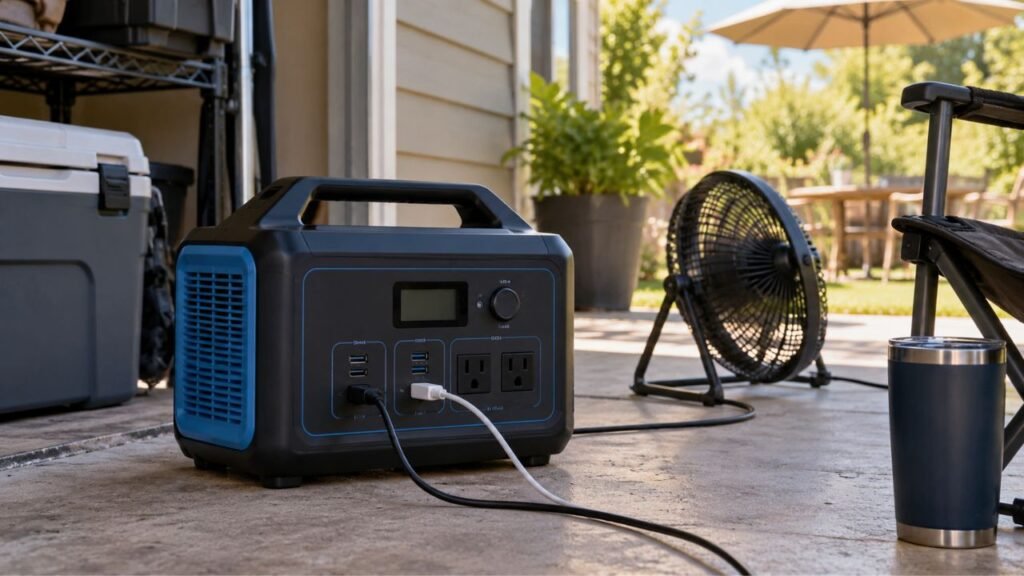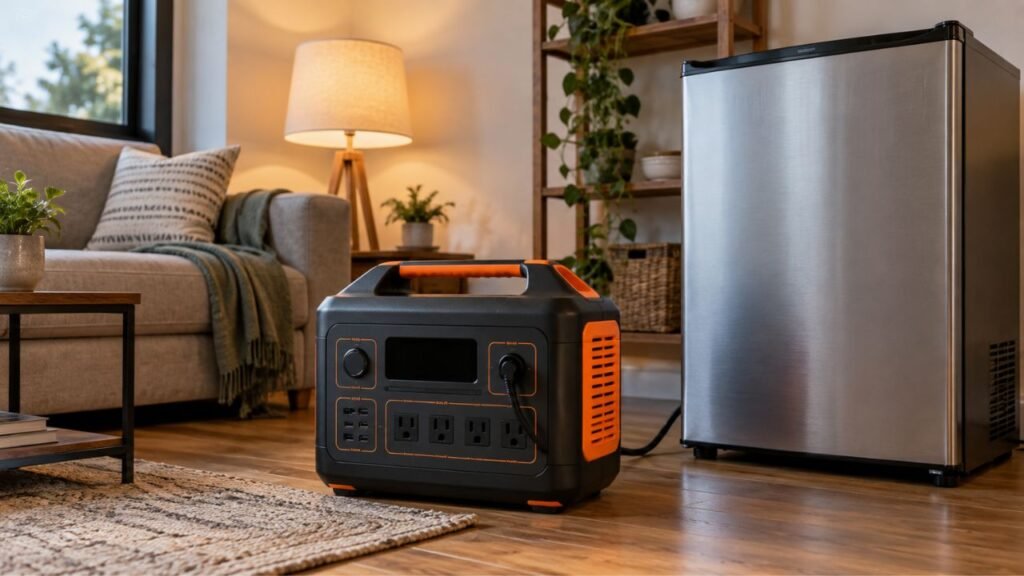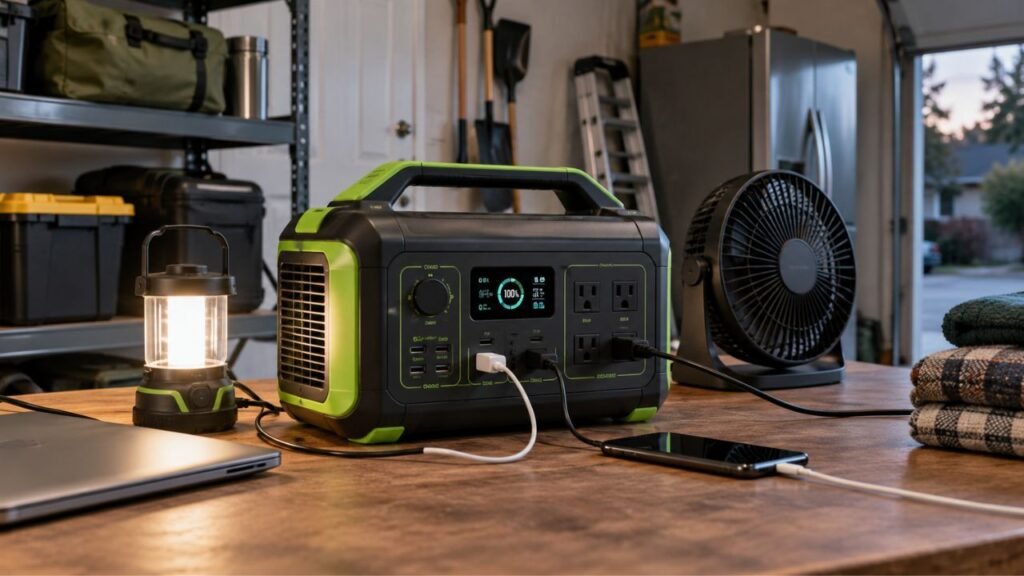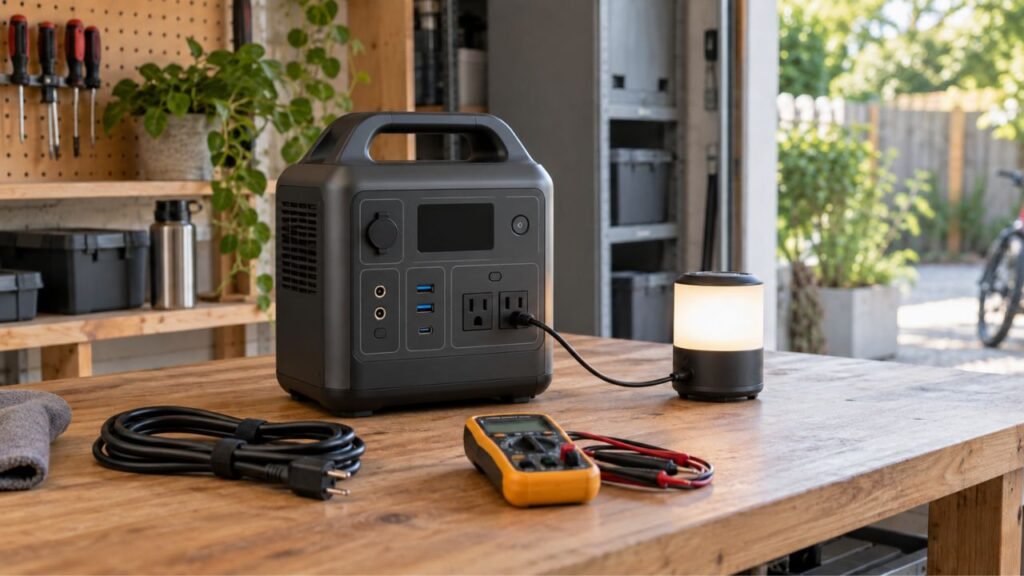
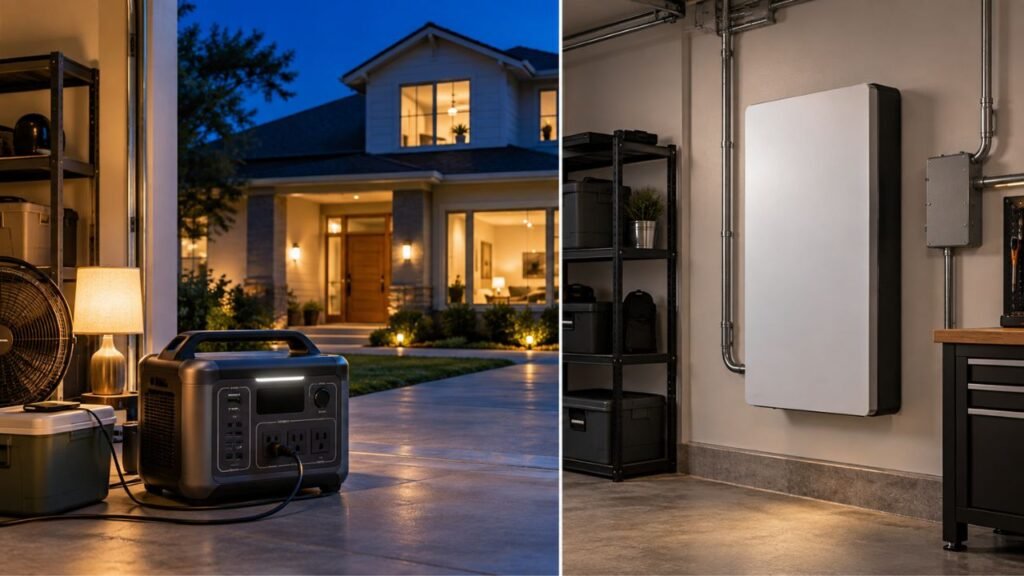
For most short power outages, a portable power station offers better value. It can keep refrigerators, Wi-Fi, lights, phones, and computers running. A home battery costs considerably more but provides automatic circuit-level backup. It becomes more useful when outages happen frequently or hardwired loads matter.
This guide compares both options for roughly one-to-six-hour outages. I’ll cover costs, runtime, output, installation, circuits, and practical household scenarios.
Key Takeaways
- Portable power stations usually offer better value for short outages.
- Home batteries provide automatic backup without moving plugs or cords.
- Battery watt-hours determine runtime, while watts determine appliance compatibility.
- Refrigerators, routers, lights, and electronics suit portable stations well.
- Hardwired pumps, furnaces, and 240V loads require extra planning.
- Frequent short outages can make an installed home battery more worthwhile.
- Your actual loads matter more than the size of your house.
Portable Power Station vs Home Battery: Quick Comparison
Both systems store electricity inside rechargeable batteries for later use. However, they deliver that stored energy in very different ways.
| Feature | Portable Power Station | Home Battery |
| Best use | Selected essential appliances | Automatic home circuit backup |
| Typical setup | Plug appliances into the unit | Permanently connected to home wiring |
| Installation | Usually none for direct use | Professional installation required |
| Automatic backup | Usually not with basic setup | Usually available |
| Portability | Portable or movable | Permanently installed |
| Upfront cost | Lower | Much higher |
| Battery capacity | Small to very large | Usually larger system-level capacity |
| 120V appliances | Commonly supported | Supported |
| 240V loads | Selected models only | Common with properly sized systems |
| Hardwired circuits | Requires suitable transfer equipment | Designed for circuit integration |
| Solar charging | Often optional | Commonly integrated with rooftop solar |
| Best for renters | Yes | Usually no |
| Best for short outages | Usually better value | Better convenience |
| Best for frequent outages | Can work | Often more convenient |
A portable station behaves like a large rechargeable power source. You connect the equipment you want to keep running.
A home battery becomes part of your home’s electrical system. It can automatically supply designated circuits when utility power disappears.
That difference matters more than battery size during short blackouts.
Which Is Better for a Short Power Outage?
For occasional outages lasting several hours, a portable power station usually makes more financial sense. Most households do not need every circuit operating during that period.
You may only need your refrigerator, internet equipment, lights, and phones. Those loads can consume relatively little energy during several hours.
A portable station lets you prioritize those essentials without installing permanent equipment. You can also use the battery for camping or outdoor work.
A home battery becomes more appealing when convenience matters greatly. It can restore power without someone carrying equipment or connecting cords.
That matters when nobody is home during the outage. It also helps when essential devices connect directly to household wiring.
Consider outage frequency as well as outage duration.
A two-hour outage twice yearly differs from two-hour outages every week. Frequent interruptions can make automatic backup much more valuable.
What Can You Keep Running During a Short Outage?
Your backup requirements depend on the appliances you actually need. Start with essentials instead of trying to power everything normally.
Refrigerator, Wi-Fi, Lights, and Electronics
These loads are excellent candidates for portable battery backup.
A typical essential-load list might include:
- Refrigerator or freezer
- Internet modem and Wi-Fi router
- Several LED lights
- Smartphones and tablets
- Laptop computers
- Television
- Small fans
Your refrigerator does not normally draw full power continuously. Its compressor cycles on and off throughout the day.
That makes real energy use different from simple nameplate wattage calculations.
Internet equipment and LED lighting usually require much less power. Their combined consumption can remain modest over several hours.
For many short outages, these loads are completely manageable.
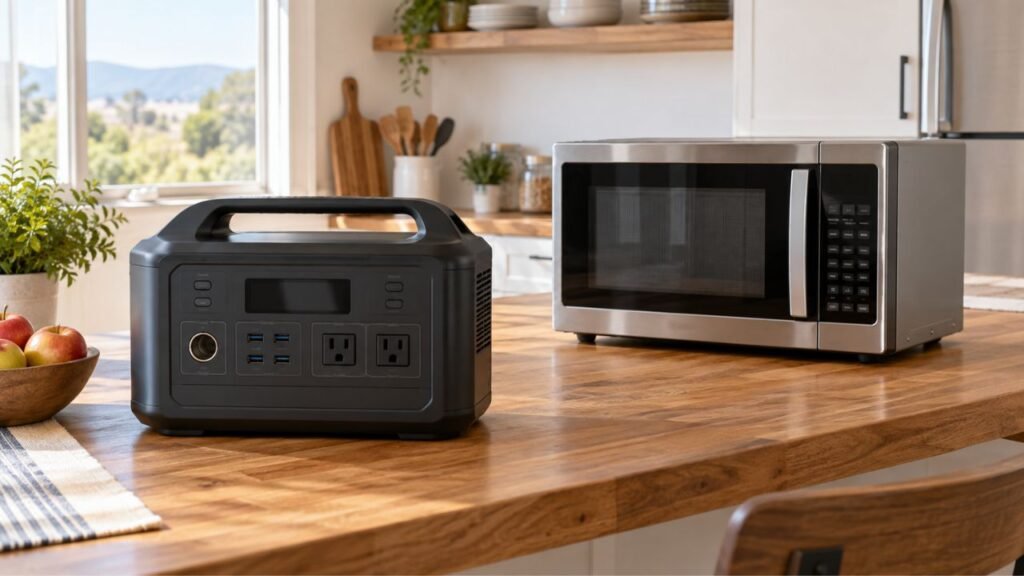
Microwave, Coffee Maker, and Kitchen Appliances
Kitchen appliances can require surprisingly high inverter output.
A microwave may use 1,000 watts or considerably more. Coffee makers, kettles, and toasters can also create large temporary loads.
However, these appliances normally operate for short periods.
That means they may not consume enormous battery capacity overall. Instead, the power station needs enough inverter output to run them.
This distinction becomes important when comparing portable stations.
A large battery with a weak inverter may still fail.
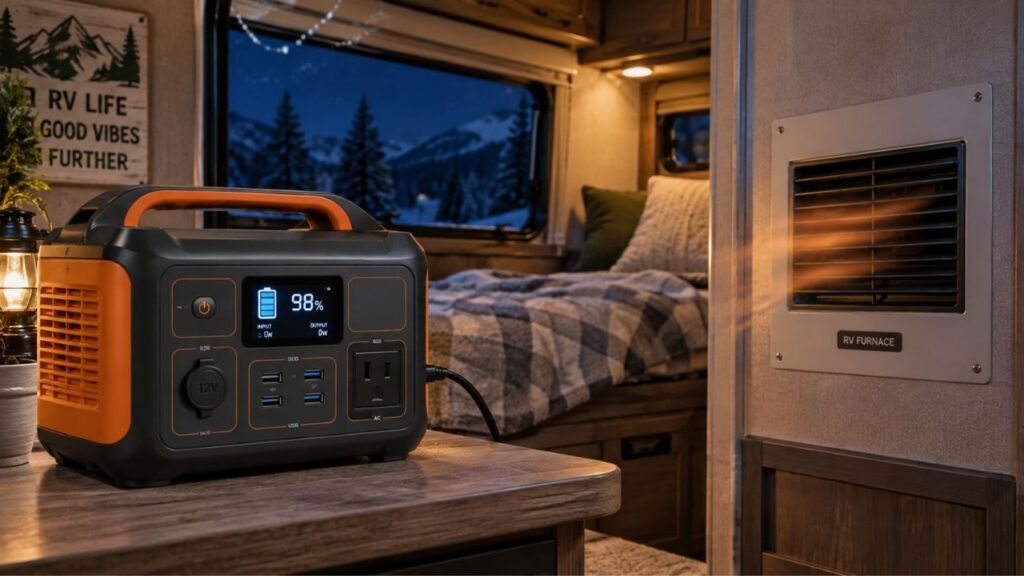
Furnace Blower, Sump Pump, and Well Pump
These appliances make backup planning more complicated.
Motors can require a brief surge when they start. That starting demand can exceed their normal running wattage significantly.
Some equipment also connects directly to household wiring.
A gas furnace may use electricity for controls and its blower. A sump pump may start repeatedly during severe weather.
A well pump could require substantial starting power and 240V service.
For these loads, check:
- Running wattage
- Starting or surge wattage
- Operating voltage
- Connection method
- Expected operating time
A home battery handles hardwired equipment more naturally.
A compatible portable system can also work with proper transfer equipment.
Central Air Conditioning and Other 240V Loads
Large 240V appliances can quickly change your decision.
Central air conditioners may require high running and starting power. Electric water heaters and dryers can also consume substantial electricity.
Do not assume every large portable station supports these appliances.
Check whether your system provides:
- True 240V output
- Enough continuous power
- Enough surge capacity
- Suitable connections
- Enough battery capacity
Running central air during a two-hour outage may sound reasonable. However, the equipment can drain smaller batteries quickly.
Sometimes turning off major loads makes far more financial sense.
How Much Battery Capacity Do You Need for a 1–6 Hour Outage?
Battery sizing becomes easier when you start with actual loads. You do not need to estimate your entire home’s consumption.
A basic planning formula looks like this:
Required battery capacity = average watts × outage hours ÷ expected efficiency
Suppose your essential appliances average about 300 watts.
For four hours:
300 watts × 4 hours = 1,200 watt-hours
The battery must actually provide more than exactly 1,200Wh. Inverter losses and system overhead reduce usable AC energy.
Adding reasonable capacity headroom gives you a safer estimate.
Example Short-Outage Scenarios
A light backup setup might include:
- Wi-Fi router
- Laptop
- Several LED lights
- Phone charging
This combination may require relatively little stored energy.
An essential home setup might add:
- Refrigerator
- Freezer
- Television
- Additional lighting
That raises both energy use and potential startup demands.
A heavier setup could also include:
- Microwave
- Coffee maker
- Furnace blower
- Sump pump
Those loads require closer attention to inverter output.
Avoid choosing a battery using capacity alone.
Two systems with similar watt-hours can perform very differently.
Battery Capacity Is Not Enough: Check Inverter Output
Watt-hours tell you roughly how long stored energy can last. Watts tell you whether the system can power an appliance.
These two specifications are easy to confuse.
Imagine a portable station containing 2,000Wh of stored energy. Its inverter can continuously provide only 1,000 watts.
A 1,500-watt appliance could exceed that inverter limit immediately. Extra battery capacity would not solve the problem.
Motor-driven appliances create another complication.
A refrigerator may draw modest power after starting. However, its compressor can briefly demand considerably more electricity.
Pumps and air conditioners can create larger startup surges.
Before choosing either backup system, check:
- Battery capacity in watt-hours
- Continuous AC output
- Surge or starting output
- Individual outlet limits
- Total system output
- Appliance starting requirements
This prevents one of the most common backup-power mistakes.
How Portable Power Stations Supply Your Home During an Outage
Portable stations can supply power using several different methods. The simplest approach works well for most short residential outages.
Plug Appliances Directly Into the Power Station
Direct connection is usually the easiest method.
Move the station near the equipment you need. Then connect appropriate appliances to its AC or DC outputs.
This approach works especially well for:
- Refrigerators
- Routers
- Laptops
- Lamps
- Televisions
- Phone chargers
No permanent electrical work is required for normal direct use.
That simplicity is a major reason portable stations suit short outages.
Use Proper Extension Cords When Necessary
Sometimes the power station cannot sit beside every appliance.
A properly rated extension cord can provide more flexibility. The cord must safely handle the connected appliance load.
Avoid undersized cords and overloaded power strips.
High-wattage equipment may require heavier-duty extension cords.
Follow your power station and appliance manufacturer instructions.
Connect Selected Home Circuits Through Transfer Equipment
Some modern portable power stations can supply household circuits.
This requires compatible equipment and a properly designed electrical connection.
A transfer switch can isolate selected circuits from utility power. Some systems support other approved transfer arrangements as well.
This can make a portable station operate more like home infrastructure.
You might then power circuits serving:
- Refrigerator
- Lights
- Internet equipment
- Furnace
- Selected outlets
- Sump pump
Never improvise by feeding electricity through a normal household receptacle.
That can create dangerous backfeeding and electrical hazards.
Have qualified electrical work completed according to local requirements.
How a Home Battery Handles the Same Short Outage
Home batteries are built around permanent electrical integration. Their biggest advantage is convenience rather than portability.
Automatic Outage Detection and Switchover
A properly configured home battery can detect grid failure automatically.
The system disconnects from the utility and supplies backed-up circuits. You may barely notice a short interruption.
There is no need to move a battery across the house.
You also avoid searching for extension cords during bad weather.
That convenience becomes valuable when outages happen repeatedly.
Critical-Load Backup vs Whole-Home Backup
Installing a home battery does not automatically mean unlimited whole-home power.
Some systems back up selected essential circuits.
Others support most or all household circuits when properly sized.
A critical-load setup might prioritize:
- Refrigerator
- Freezer
- Lights
- Internet
- Furnace
- Security system
- Selected outlets
Whole-home backup requires much more output and stored energy.
Large loads can also shorten runtime significantly.
Do not assume the words “home battery” mean everything operates normally.
The battery, inverter, panel configuration, and loads must work together.
Why Automation Matters During Short Outages
Automatic backup sounds unnecessary when an outage lasts two hours.
In some homes, however, those two hours matter greatly.
Imagine a storm outage while nobody is home.
Your refrigerator may remain powered without any manual setup. A sump pump can continue protecting a basement.
Security equipment can also remain online.
That convenience is one of the strongest reasons to choose installed storage.
Does a Home Battery Make Financial Sense for Short Outages?
A home battery can cost many times more than a portable power station. Installation, electrical hardware, permits, and labor increase the total.
For occasional short outages alone, that investment may be difficult to justify.
Suppose your neighborhood loses power twice each year. Each outage lasts around two hours.
If your only concerns are food refrigeration and internet access, a portable station can solve the problem for much less money.
A home battery makes more sense when it does additional work.
For example, you may also want:
- Rooftop solar energy storage
- Automatic outage protection
- Time-of-use energy management
- Frequent backup operation
- Large circuit coverage
- Higher household power output
- Long-term home energy management
Installed home batteries often enter five-figure territory after installation. The exact cost varies considerably between systems and homes.
Portable power stations range from compact units to expensive expandable systems.
Therefore, compare complete systems rather than product categories.
A large portable setup with extra batteries and transfer equipment can also become expensive.
What About Battery Tax Credits and Incentives in 2026?
Backup battery incentives can change the real cost significantly. However, rules have changed, so older online guides may be outdated.
Do not assume the previous federal residential clean-energy credit still applies to a battery purchased in 2026. That federal credit ended for qualifying expenditures after December 31, 2025.
State, utility, local, and virtual power plant incentives may still exist.
Check current programs before calculating your final installed cost.
Portable Power Stations for Renters and Apartments
Portable systems usually make far more sense for renters. They provide backup electricity without permanently modifying the building.
You can take the power station when you move.
You can also use it anywhere with suitable ventilation and placement conditions specified by its manufacturer.
For apartment outages, prioritize essentials such as:
- Refrigerator
- Internet equipment
- Phones
- Laptop
- Lamps
- Small fans
Avoid assuming every large appliance must stay operational.
Reducing backup loads can greatly lower the required battery size.
Apartment users should also follow building rules and manufacturer instructions. Keep the station dry and maintain proper clearances while operating.
When a Portable Power Station Is the Better Choice
A portable station fits homeowners who mainly need simple emergency power. It works especially well when installation and automation are unnecessary.
Choose a portable power station when:
- Your outages usually last only several hours.
- Outages happen only occasionally.
- You mainly need selected appliances.
- You are comfortable plugging equipment in manually.
- You want to avoid permanent electrical installation.
- You rent your house or apartment.
- You also want portable outdoor power.
- Your backup budget is relatively limited.
- You can leave large 240V loads turned off.
For many households, this is enough protection.
You do not always need whole-home power during brief outages.
When a Home Battery Is Worth Paying More For
A home battery becomes more attractive when backup convenience matters daily. Its value increases when the system serves purposes beyond emergencies.
Consider a home battery when:
- You want automatic outage backup.
- Short outages occur frequently.
- Hardwired equipment must remain powered.
- You need substantial 240V capability.
- You already have rooftop solar.
- You want circuit-level backup.
- You dislike managing extension cords.
- You want energy-rate management features.
- You need broader household coverage.
- Nobody may be home when outages begin.
The battery itself is only one part of the value.
Electrical integration is what changes the experience.
Is There a Middle Ground Between the Two?
Portable and permanently installed batteries are no longer completely separate categories. Larger portable systems can now provide capabilities once limited to fixed storage.
Expandable Portable Power Stations
Many larger portable systems support extra battery modules.
You might begin with enough capacity for short outages. Later, you can add storage if your needs increase.
This makes the initial purchase less restrictive.
Expansion also helps during longer emergencies.
However, additional batteries increase cost, weight, and storage requirements.
Portable Stations With 120V and 240V Output
Some high-capacity portable systems now provide 240V power.
That can open the door to larger residential loads.
Still, voltage alone does not guarantee compatibility.
You must also check:
- Continuous output
- Surge output
- Battery capacity
- Electrical connection
- Appliance requirements
A 240V outlet does not automatically create whole-home backup.
Portable Station Plus Transfer Switch
A compatible portable station and transfer switch can provide useful circuit-level backup.
This arrangement can sit between two extremes.
You avoid buying a conventional stationary battery system. Yet you can still power selected household circuits safely.
However, compare the complete cost.
Once you add expansion batteries, electrical hardware, and professional installation, the price difference can shrink.
At that point, compare the portable setup against installed battery quotes.
Common Mistakes When Choosing Backup Power for Short Outages
Short outages seem easy to plan for, but several mistakes can create poor results. Check both power requirements and connection requirements before buying.
- Comparing only watt-hours: Capacity does not tell you maximum appliance output.
- Ignoring startup surge: Refrigerators and pumps can draw extra starting power.
- Buying too much battery: Short outages rarely require multi-day storage.
- Ignoring hardwired loads: Some equipment cannot simply plug into the station.
- Assuming every station provides 240V: Many portable models provide only 120V.
- Assuming every home battery backs up everything: System design determines circuit coverage.
- Ignoring charging time: Your backup battery should be ready before outages begin.
- Overlooking individual outlet limits: Total inverter output is not always the only restriction.
- Trying unsafe backfeeding methods: Never use improvised connections through household outlets.
- Forgetting outage frequency: Frequent outages make automation more valuable.
Avoiding these mistakes can save substantial money.
It also makes your backup system more dependable.
A Simple Way to Decide Between Them
The easiest way to choose is matching the system to a realistic outage. Think about what you would actually use for several hours.
Outages Last 1–2 Hours and You Need Wi-Fi and Electronics
Choose a portable power station in most cases.
A modest system can handle internet equipment, laptops, phones, and lights easily.
There is little reason to install expensive whole-home storage solely for these loads.
Outages Last 2–4 Hours and You Need the Refrigerator Too
A portable power station still makes sense for most households.
Choose enough battery capacity and inverter output for the refrigerator.
Remember to account for compressor startup power.
You may also run Wi-Fi, lights, and smaller electronics simultaneously.
Outages Last 4–6 Hours and You Need Several Essentials
Consider a larger portable or expandable system.
Calculate the combined energy consumption of your selected equipment first.
A home battery becomes more attractive if many required appliances are hardwired.
Outages Are Short but Happen Several Times Every Month
Now the decision changes.
Repeated manual setup can quickly become inconvenient.
Automatic home battery backup may justify its higher cost here.
The outage duration remains short, but frequency increases the value of automation.
You Need a Well Pump, Sump Pump, or Furnace
Check the equipment carefully before choosing either system.
These loads may have substantial startup requirements or hardwired connections.
A properly configured home battery handles this naturally.
A compatible portable system can also work through approved transfer equipment.
You Want the Entire House to Feel Normal During Every Outage
A properly sized home battery is usually the stronger option.
You gain automatic circuit backup and much easier household operation.
You will still need to manage extremely large loads carefully.
No battery provides unlimited energy during an outage.
Portable Power Station vs Home Battery for Short Outages: Final Verdict
For most U.S. households facing occasional short blackouts, a portable power station offers the better balance. It costs less, requires little setup, and handles common essential appliances effectively.
You probably do not need permanent whole-home storage just to survive a three-hour blackout. Keeping refrigeration, Wi-Fi, lighting, and communication working may be enough.
A home battery becomes the stronger choice when outages happen frequently. It also makes sense when automatic operation and hardwired circuits matter.
Before buying either option, write down your essential loads.
Then check four things:
- Required battery capacity
- Continuous inverter output
- Starting surge
- Connection method
Those numbers tell you much more than marketing labels.
For occasional short outages, start with the simplest system that safely covers your essentials. You can always choose more capacity when your actual needs justify it.
Related FAQs
Here are quick answers to common questions homeowners ask when comparing portable and permanently installed battery backup.
Is a Portable Power Station Enough for a Two-Hour Power Outage?
Yes, a portable power station is often enough for a two-hour outage. A properly sized unit can keep a refrigerator, router, lights, phones, and laptops running. Check both battery capacity and inverter output before connecting high-wattage appliances.
How Big of a Power Station Do I Need for a Four-Hour Outage?
Add the average watts of your essential appliances and multiply by four hours. Then add capacity headroom for inverter losses and unexpected use. A household running only refrigeration, Wi-Fi, lights, and electronics may need far less capacity than expected.
Can a Portable Power Station Keep a Refrigerator Running During an Outage?
Yes, most properly sized portable power stations can operate refrigerators. Make sure the inverter handles both normal running wattage and compressor startup surge. Actual runtime depends on battery capacity, refrigerator efficiency, room temperature, and compressor cycling.
Can a Portable Power Station Power Household Circuits?
Some larger portable power stations can supply selected household circuits through compatible transfer equipment. The setup must isolate backup power from the utility grid. Have any permanent or panel-level electrical connection completed according to applicable electrical requirements.
Can a Portable Power Station Run 240V Appliances?
Some portable systems support 240V appliances, but many do not. Check voltage, continuous output, surge capability, and connection type before buying. Large air conditioners, well pumps, dryers, and other 240V loads may require substantial battery power.
Does a Home Battery Automatically Turn On During an Outage?
Most properly configured home battery backup systems can switch to stored battery power automatically. The exact behavior depends on the system design and electrical configuration. Automatic operation is one of their biggest advantages over basic portable setups.
Is a Home Battery Worth It Without Solar Panels?
A home battery can work without solar panels and provide outage backup. Whether it makes financial sense depends on outage frequency, electricity rates, incentives, and desired automation. Solar generally gives the battery more opportunities to provide ongoing value.
Is a Home Battery Worth Buying for Occasional Outages?
Usually not if occasional short outages are your only concern. A portable station often covers essential appliances for much less money. A home battery becomes easier to justify when you also want automation, solar storage, or broader circuit coverage.
Can a Portable Power Station Replace a Home Battery?
A large portable system can provide substantial backup, but it does not automatically replace an installed home battery. Permanent batteries usually offer easier circuit integration and automatic operation. Your required loads and connection method determine whether portable equipment is enough.
Do Home Batteries Qualify for a Federal Tax Credit in 2026?
Do not assume the previous federal residential battery credit applies to new 2026 expenditures. That credit ended for qualifying residential clean-energy expenditures after December 31, 2025. State, utility, local, and other incentive programs may still be available.

Warren Turner writes practical guides and reviews on generators, portable power stations, and battery backup systems. He focuses on real-world performance, everyday power needs, and helping readers choose dependable equipment without unnecessary complexity.