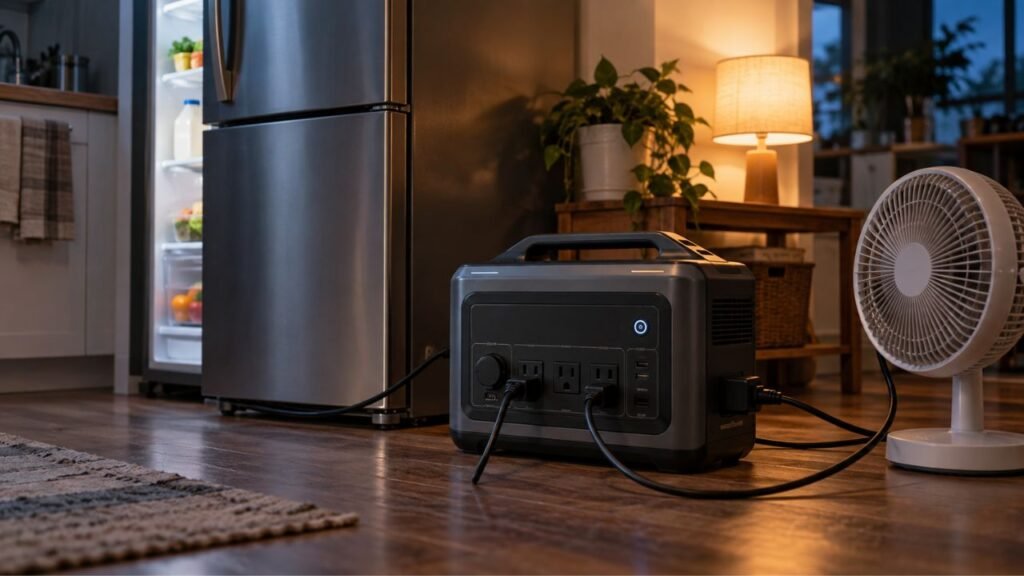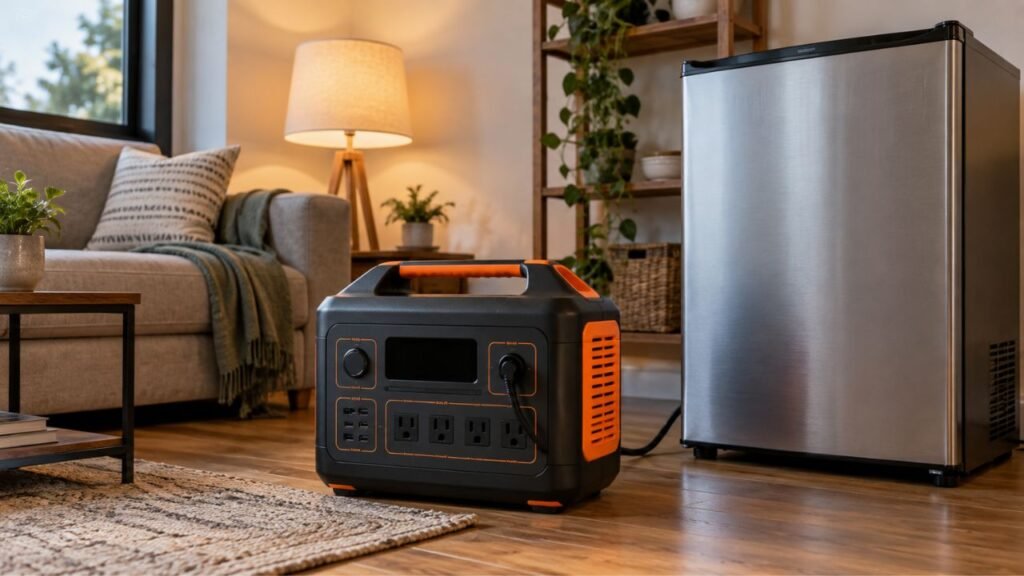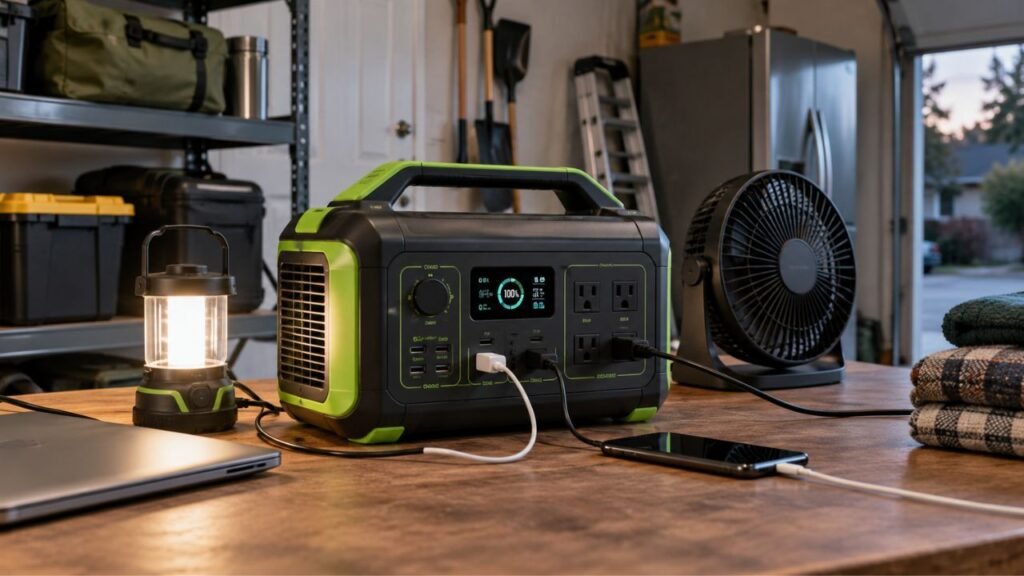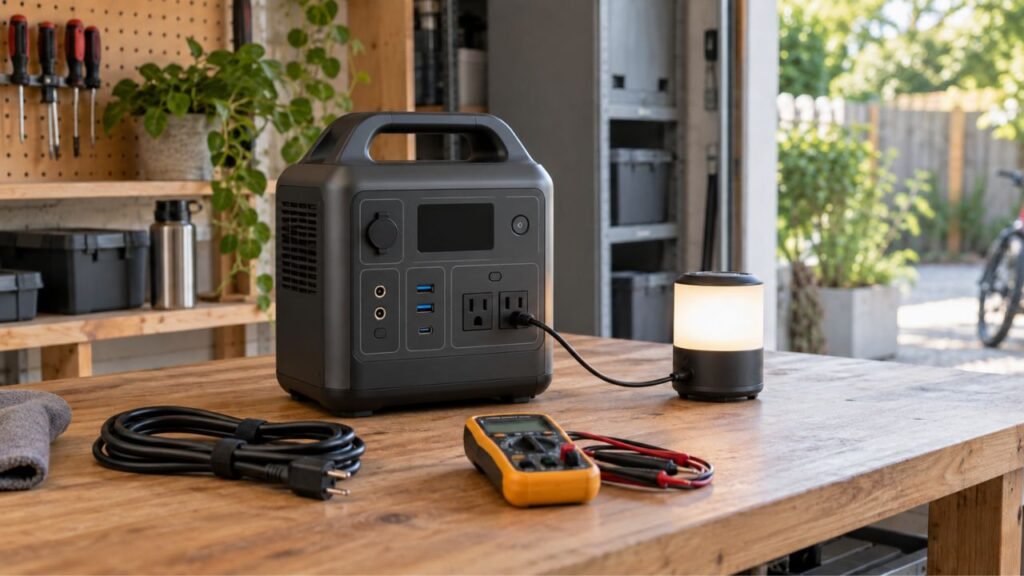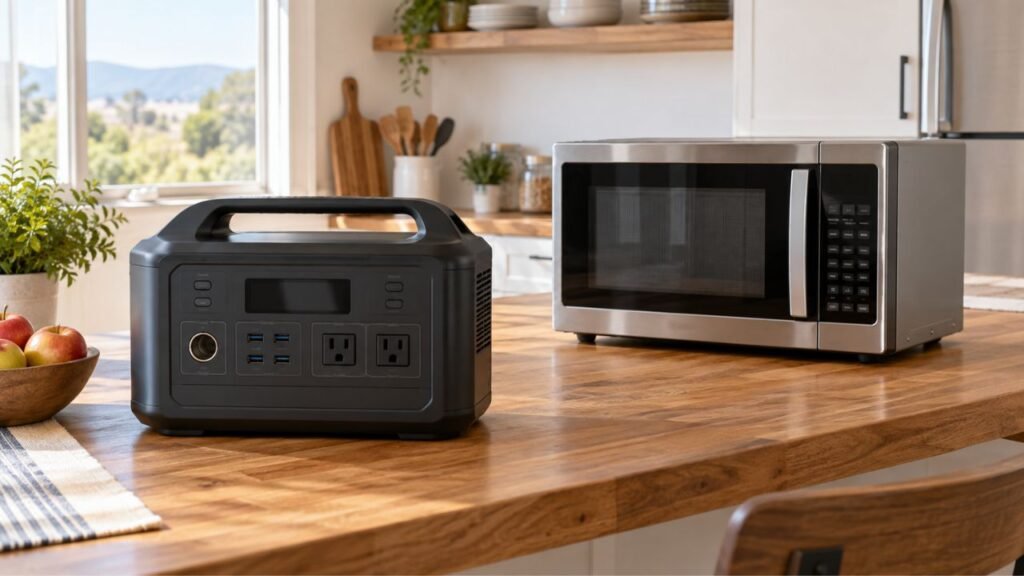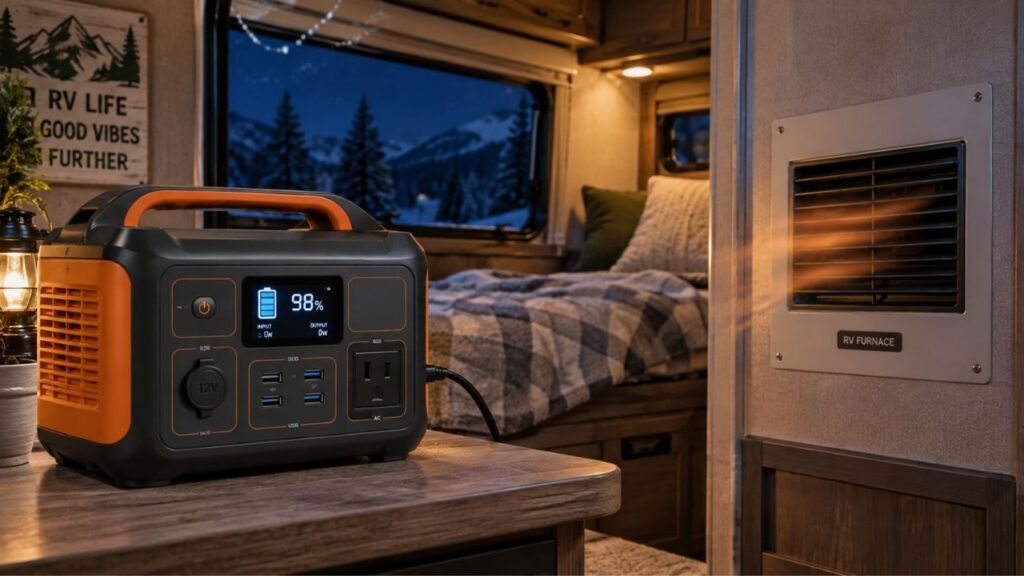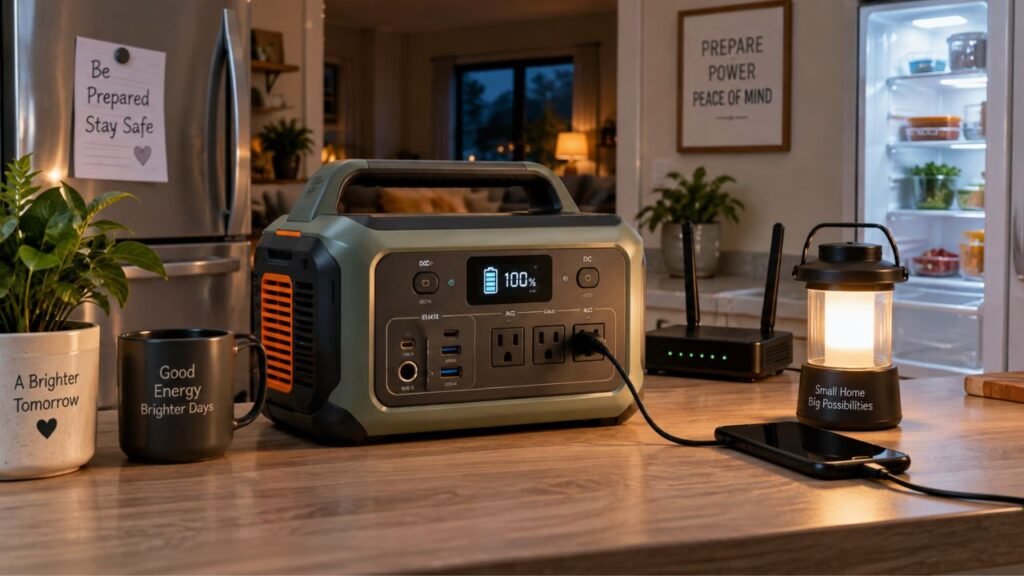

You can reduce refrigerator portable power station consumption by limiting door openings, using efficient temperature settings, keeping the refrigerator cool, and reducing unnecessary power station losses. Pre-cooling food before an outage can also save valuable battery energy.
In this guide, I’ll show you where that battery power goes. We’ll also cover practical ways to make your refrigerator run longer safely.
Key Takeaways
- Keep your refrigerator around 35°F to 38°F for efficient cooling.
- Avoid frequent door openings during a power outage.
- Pre-cool the refrigerator before switching to battery power.
- Keep the refrigerator away from sunlight and other heat sources.
- Check door seals and ventilation if compressor runtime seems excessive.
- Disconnect unnecessary devices from your portable power station.
- Measure actual watt-hour consumption instead of relying on running watts.
- Do not sacrifice food safety simply to extend battery runtime.
Why Does a Refrigerator Drain a Portable Power Station So Quickly?
A refrigerator does not use electricity at one constant rate. Compressor cycling, startup demand, and inverter losses all affect battery consumption.
The Compressor Cycles On and Off
Your refrigerator’s compressor does not normally run continuously.
It starts when the internal temperature rises above its target. Once everything becomes cold enough, the compressor shuts off again.
This cycling behavior is important when using a portable power station.
Suppose your refrigerator draws 150 watts while its compressor runs. That does not mean it consumes 150 watt-hours every hour.
The compressor may operate only part of each hour.
However, several conditions can increase its operating time:
- A warm kitchen or garage
- Frequent door openings
- Warm food placed inside
- Poor door seals
- Blocked refrigerator ventilation
- Very cold temperature settings
Your goal is not necessarily reducing compressor running wattage.
Instead, you want the compressor running less frequently when possible.
Startup Surge Uses High Power Briefly
The refrigerator compressor usually needs extra power when starting.
For example, a refrigerator drawing 150 watts while running might briefly require several times that amount during startup.
This starting surge mainly affects whether your power station can run the refrigerator successfully.
It has less effect on total daily energy consumption.
Think of it this way:
Starting watts determine whether the refrigerator starts. Watt-hours determine how long your battery lasts.
Both numbers matter, but they solve different problems.
The Portable Power Station Uses Energy Too
Some battery energy disappears before reaching your refrigerator.
Your portable power station stores electricity as DC energy. Most household refrigerators in the United States use 120V AC electricity.
The station’s inverter converts that stored DC energy into usable AC power.
That conversion creates some energy loss.
The AC inverter may also consume electricity while remaining active. This happens even when your refrigerator compressor temporarily stops.
That means battery consumption comes from two places:
- The refrigerator itself
- The power station supplying the refrigerator
Reducing both can noticeably improve backup runtime.
Which Changes Reduce Refrigerator Power Consumption the Most?
Some energy-saving steps make a much bigger difference than others. Start with the changes that reduce compressor runtime and unwanted heat.
| Action | Likely Impact | Best Time | Important Note |
| Keep refrigerator doors closed | High | During outage | Decide what you need before opening |
| Pre-cool refrigerator | High | Before outage | Let grid power handle initial cooling |
| Pre-chill food and drinks | High | Before outage | Avoid loading warm items |
| Keep refrigerator away from heat | Moderate to high | Anytime | Hot surroundings increase compressor runtime |
| Use an efficient temperature | Moderate | Anytime | Avoid unnecessarily cold settings |
| Check door seals | Moderate | Anytime | Air leaks increase cooling demand |
| Maintain proper ventilation | Moderate | Anytime | Heat must escape around the condenser |
| Clean accessible condenser coils | Moderate | Maintenance | Follow manufacturer instructions |
| Disable unnecessary ice-making | Low to moderate | During outage | Depends on refrigerator design |
| Disconnect other station loads | High for runtime | During outage | Saves battery but not refrigerator consumption |
The easiest wins usually come from controlling heat.
Every bit of unwanted heat entering your refrigerator eventually needs removing. Removing that heat requires compressor runtime and battery energy.
Set the Refrigerator Temperature for Efficiency and Food Safety
Setting the refrigerator colder than necessary can waste portable power station energy.
For most household refrigerators, approximately 35°F to 38°F provides a practical balance between food storage and energy efficiency.
You should keep perishable refrigerated food at 40°F or below.
That does not mean you should intentionally set the refrigerator at exactly 40°F. Temperatures naturally fluctuate as the compressor cycles and doors open.
A setting near 37°F gives you some safety margin.
Avoid turning the temperature control to its coldest setting before an outage unless there is a specific reason.
That forces the refrigerator to remove additional heat. Your battery then spends more energy maintaining an unnecessarily low temperature.
A simple refrigerator thermometer can help you avoid guessing.
Pre-Cool the Refrigerator Before Switching to the Power Station
Pre-cooling shifts some cooling work away from your battery. This works especially well when storms or planned outages are expected.
Before switching to portable power, consider these steps:
- Make sure the refrigerator is already fully cold.
- Chill drinks before placing them inside.
- Refrigerate groceries before the outage whenever possible.
- Freeze reusable cold packs ahead of time.
- Avoid adding large amounts of warm food later.
Imagine filling your refrigerator with room-temperature bottled drinks during an outage.
The refrigerator must remove all that heat using battery power.
If those same drinks were already cold, much less cooling would be required.
Pre-cooling does not permanently make your refrigerator more efficient.
It simply lets grid electricity handle work that your battery would otherwise perform.
During limited backup power, that can make a meaningful difference.
Keep Refrigerator Doors Closed as Much as Possible
Every refrigerator door opening introduces warmer room air.
Your refrigerator must cool that warmer air after you close the door. Frequent openings can therefore increase compressor cycling.
You can reduce this problem with a little planning.
Before opening the refrigerator, decide exactly what you need.
Keep commonly used items near the front. Drinks, medication, milk, and prepared foods should be easy to reach.
Avoid standing with the door open while deciding what to eat.
During an extended blackout, you may also keep drinks in a separate cooler. That prevents frequent refrigerator openings for nonessential items.
The less warm air entering, the less heat your refrigerator must remove.
Keep the Refrigerator Cool and Properly Ventilated
Room temperature affects refrigerator energy consumption more than many people realize. A hotter environment makes the cooling system work harder.
Keep It Away From Heat Sources
Your refrigerator should not receive unnecessary external heat.
Whenever possible, keep it away from:
- Direct afternoon sunlight
- Ovens
- Space heaters
- Hot water equipment
- Other heat-producing appliances
- Extremely hot garage spaces
This becomes particularly important during summer power outages.
A refrigerator sitting in a 95°F garage usually works harder than one inside a cooler room.
Do not move a refrigerator casually during an outage, though.
Instead, consider environmental temperature when planning your backup setup beforehand.
Leave Enough Airflow Around the Refrigerator
Your refrigerator moves heat from inside the cabinet to the surrounding room.
That heat needs somewhere to go.
Blocking ventilation around the appliance can make heat removal less efficient.
Keep required vents and clearances unobstructed.
Different refrigerator models have different ventilation requirements. Follow the clearance recommendations from your refrigerator manufacturer.
Avoid stuffing boxes, blankets, or other materials around ventilation areas.
Clean Condenser Coils When Applicable
Dirty condenser coils can make some refrigerators work harder.
Dust, pet hair, and debris reduce effective heat transfer.
If your refrigerator has accessible condenser coils, inspect them periodically.
Clean them according to the manufacturer’s maintenance instructions.
Some newer refrigerators have different condenser designs that need little homeowner maintenance.
Do not remove covers or panels unless the manufacturer instructs you.
Check the Door Gasket for Cold-Air Leaks
A refrigerator cannot conserve energy well if the door does not seal properly.
Warm air entering through a damaged gasket can keep the compressor running longer.
Check the gasket periodically for simple problems:
- Look for cracks, tears, or warped areas.
- Remove food residue from the sealing surfaces.
- Make sure nothing prevents the door from closing.
- Check whether the door sits evenly against the cabinet.
- Watch for unusual condensation near the door edges.
- Replace damaged seals when necessary.
Cleaning alone can sometimes improve a poor seal.
Food residue or sticky spills can prevent sections of the gasket from contacting the refrigerator correctly.
If the compressor suddenly begins running much longer than normal, the door seal is one of the first things worth checking.
How Full Should the Refrigerator Be During an Outage?
A moderately stocked refrigerator usually holds temperature better than a nearly empty one.
Cold food and drinks provide thermal mass. They help stabilize the internal temperature when the compressor stops.
However, completely packing every shelf creates another problem.
Cold air still needs room to circulate.
Blocking internal vents can create warm spots and force the refrigerator to work inefficiently.
Aim for a reasonably stocked refrigerator without overcrowding it.
If you have large empty areas before an expected outage, pre-chilled water containers can add thermal mass.
Make sure they do not block air vents.
Avoid putting room-temperature water inside once the outage starts. Cooling it would consume additional battery energy.
Turn Off Unnecessary Refrigerator Features During Battery Backup
Modern refrigerators may power more than the compressor. Some optional features can consume energy without being essential during an outage.
Automatic Ice Maker
Making new ice probably is not your priority during emergency battery backup.
If your refrigerator allows the automatic ice maker to be disabled independently, consider switching it off.
This prevents unnecessary ice-making cycles.
You can prepare ice before the outage instead.
Through-the-Door Ice and Water Features
Ice dispensers, water dispensers, heaters, motors, and related electronics can contribute to refrigerator energy consumption.
You may not be able to disable every feature separately.
However, avoiding unnecessary dispenser use can still support your overall conservation strategy.
Your owner’s manual may explain available energy-saving settings.
Special Cooling Modes
Some refrigerators include modes called:
- Power Cool
- Super Cool
- Quick Cool
- Power Freeze
- Turbo Freeze
- Fast Freeze
These modes intentionally increase cooling performance.
That can be useful after loading groceries. It usually is not what you want during limited battery backup.
Turn these modes off unless you genuinely need rapid cooling.
Reduce Power Station Losses While Running the Refrigerator
Saving refrigerator energy is only half the job. You should also prevent the portable power station from wasting stored battery capacity.
Disconnect Other Devices From the Power Station
If refrigerator runtime is your priority, remove unnecessary loads.
A few small devices can quietly use significant energy over many hours.
Examples include:
- Televisions
- Laptop chargers
- Gaming systems
- Decorative lights
- Phone chargers left connected
- Fans
- Wi-Fi equipment you do not need
- Small kitchen appliances
Disconnecting these devices does not make your refrigerator more efficient.
It simply leaves more battery capacity available for refrigeration.
That distinction matters when estimating runtime.
Account for AC Inverter Losses
Your portable power station may advertise 1,000Wh of battery capacity.
That does not necessarily mean your refrigerator receives every one of those 1,000Wh through the AC outlet.
Some energy is lost during DC-to-AC conversion.
The station also needs energy for its control system, cooling, screen, and inverter operation.
For that reason, theoretical runtime calculations often look better than real-world results.
Build some safety margin into your estimates.
Use DC Only When the Refrigerator Supports It
This mainly applies to portable 12V refrigerators used in RVs, trucks, boats, and camping setups.
If both your refrigerator and power station support compatible DC operation, a direct DC connection may avoid the AC inverter conversion stage.
However, a normal household refrigerator should not be connected to random DC outputs.
Standard U.S. kitchen refrigerators generally require 120V AC power.
Use only the voltage, connector, and power source specified by the refrigerator manufacturer.
Be Careful With ECO or Auto-Shutoff Modes
Many portable power stations include an ECO or automatic shutdown feature.
These settings can turn the AC inverter off after detecting a very small load for a certain period.
That sounds useful for saving battery power.
However, refrigerators create an unusual situation.
When the compressor stops, the refrigerator’s temporary power draw may become very low.
Some stations could interpret this as an unused outlet and shut down AC output.
Then your refrigerator may not restart when cooling is needed again.
Check your power station manual before using automatic AC shutdown with a refrigerator.
Test the setup before depending on it during an emergency.
Measure How Much Energy Your Refrigerator Actually Uses
Internet wattage estimates can only take you so far. Measuring your own refrigerator gives you much better runtime information.
Use a Plug-In Watt Meter
A plug-in energy meter can show how much electricity your refrigerator actually consumes.
Do not focus only on instantaneous running watts.
Instead, measure total watt-hours over a longer period.
Twenty-four hours provides a much more useful picture because the refrigerator cycles throughout the day.
Try to measure under normal household conditions.
Record factors such as:
- Total watt-hours consumed
- Approximate room temperature
- Refrigerator temperature
- Number of door openings
- Whether the ice maker was active
Suppose your refrigerator uses 1,200Wh during 24 hours.
Its average hourly energy use would be roughly:
1,200Wh ÷ 24 = 50Wh per hour
That average is much more useful for runtime planning than compressor running wattage alone.
Use the Refrigerator’s EnergyGuide Label
Many refrigerators sold in the United States have a yellow EnergyGuide label.
It often includes estimated annual electricity consumption in kilowatt-hours.
You can convert that annual number into estimated daily consumption.
Use this formula:
Daily energy use = Annual kWh ÷ 365 × 1,000
For example, suppose the refrigerator is rated at 500 kWh per year.
500 ÷ 365 × 1,000 = about 1,370Wh per day
That gives you a useful starting estimate.
Actual consumption can still vary.
Room temperature, door openings, refrigerator age, settings, and food load all affect real-world performance.
How Much Longer Can These Changes Make Your Power Station Last?
Reducing average refrigerator demand can noticeably improve runtime. The exact improvement depends on your refrigerator and power station.
Consider this simplified example:
| Example | Before Changes | After Changes |
| Usable battery energy | 900Wh | 900Wh |
| Average refrigerator load | 70W | 55W |
| Approximate runtime | 12.9 hours | 16.4 hours |
| Runtime gained | – | About 3.5 hours |
These numbers are only an illustration.
Your refrigerator may use more or less electricity.
You can use this basic formula:
Runtime = Usable battery energy in Wh ÷ Average refrigerator power in watts
Suppose your power station provides roughly 900Wh of usable AC energy.
Your refrigerator averages 60 watts.
900Wh ÷ 60W = about 15 hours
If better usage habits reduce average consumption to 50 watts:
900Wh ÷ 50W = about 18 hours
You gained approximately three hours without buying another battery.
That is why reducing average consumption matters.
Does Solar Charging Reduce Refrigerator Consumption?
No. Solar charging does not reduce the refrigerator’s actual electricity consumption.
It adds energy back into your power station.
That difference is important.
There are three separate ways to improve backup duration:
Reduce demand: Make the refrigerator use fewer watt-hours.
Add supply: Recharge the power station using solar, grid power, or another supported source.
Increase storage: Add a larger power station or compatible expansion battery.
Solar can still be extremely useful during long outages.
Suppose your refrigerator consumes 1,000Wh per day while your solar setup adds 700Wh.
Your battery only needs to supply the remaining difference.
However, the refrigerator still consumed roughly the same amount of electricity.
Solar simply replaced part of that energy.
Should You Turn the Refrigerator Off to Save Power?
Turning the refrigerator off obviously stops electrical consumption. However, it is not a good routine strategy for protecting perishable food.
Refrigerated food should generally remain at 40°F or colder.
Without active cooling, the refrigerator gradually warms.
An unopened refrigerator may keep food safely cold for roughly four hours after losing power, but conditions vary.
Room temperature matters.
How cold the refrigerator was beforehand also matters.
Instead of manually switching your refrigerator on and off based on guesses, use a refrigerator thermometer.
Keeping food safely cold should come before stretching the battery another few hours.
If battery capacity becomes critically low, prioritize food safety and alternative cold storage.
What Should You Do During a Long Power Outage?
During extended outages, energy management becomes more important. Follow a simple priority order rather than trying random battery-saving tricks.
- Keep the refrigerator connected if food requires refrigeration.
- Monitor internal temperature with a refrigerator thermometer.
- Keep refrigerator and freezer doors closed.
- Avoid loading warm groceries or drinks.
- Turn off unnecessary refrigerator features.
- Disconnect nonessential loads from the power station.
- Recharge the power station whenever safe energy becomes available.
- Use solar charging when sunlight and equipment allow it.
- Move critical food to safe alternative cold storage if necessary.
Try to plan before the battery becomes almost empty.
Waiting until the station reaches a few percent leaves you with fewer options.
During predictable storms, charge the station fully beforehand.
Pre-cool the refrigerator while grid electricity is still available.
When High Consumption Means Something Is Wrong
A refrigerator that suddenly uses much more electricity may have an efficiency problem. Several simple checks can help identify the cause.
Compressor Runs Almost Constantly
A compressor running frequently does not automatically mean something is broken.
Consider recent conditions first.
Possible reasons include:
- Very hot indoor temperature
- Frequent door openings
- Warm groceries recently added
- Temperature setting changed colder
- Damaged door gasket
- Blocked airflow
- Dirty condenser area
- Refrigerator door not fully closed
Correct the simple causes first.
If the compressor continues running abnormally, appliance service may be needed.
Consumption Suddenly Increased
Actual energy measurements are useful here.
Suppose your refrigerator normally consumes 1,100Wh daily but suddenly starts using 1,800Wh under similar conditions.
That change deserves investigation.
Check temperature settings, seals, airflow, and recent usage.
Listen for unusual operating sounds.
If nothing obvious explains the increase, consider professional refrigerator service.
Power Station Runtime Is Much Shorter Than Expected
Do not immediately blame your refrigerator.
First check the complete system.
Look at:
- Other devices connected to the station
- Actual battery percentage
- AC inverter settings
- Power station idle consumption
- Refrigerator cycling frequency
- Room temperature
- Battery temperature
- Available battery capacity
Runtime estimates based on advertised capacity are rarely exact.
Your real measurement gives you much better information.
Refrigerator Energy-Saving Mistakes to Avoid
Some battery-saving ideas sound reasonable but create new problems.
Avoid these common mistakes:
- Do not raise refrigerator temperature beyond safe food-storage limits.
- Do not switch the refrigerator off overnight without monitoring temperature.
- Do not completely pack shelves and block cold-air circulation.
- Do not cover refrigerator ventilation areas.
- Do not block portable power station cooling vents.
- Do not assume running watts equal hourly energy use.
- Do not assume advertised battery capacity equals usable AC energy.
- Do not count solar charging as reduced refrigerator consumption.
- Do not enable automatic ECO shutdown without testing refrigerator behavior.
- Do not load large amounts of warm food during an outage.
- Do not use unsupported cables or electrical connections.
Safe and predictable operation should always come first.
Best Ways to Reduce Refrigerator Power Station Consumption
Start by controlling heat entering the refrigerator.
Keep the doors closed, maintain proper seals, and keep the appliance away from unnecessary heat.
Next, use a sensible temperature setting.
Around 35°F to 38°F works well for many refrigerators while maintaining safe food temperatures.
Pre-cooling is another valuable strategy.
If you know an outage may happen, let grid power cool your refrigerator and food beforehand.
Then look at the portable power station itself.
Disconnect unnecessary loads and understand that the AC inverter consumes some battery energy.
Finally, measure your refrigerator’s actual watt-hour use.
Real consumption data makes your backup calculations far more accurate.
Conclusion
Reducing refrigerator portable power station consumption is mostly about reducing unnecessary compressor runtime and avoiding wasted battery energy. Keep the doors closed, control heat, use efficient temperature settings, and maintain your refrigerator properly.
Also pay attention to the power station itself. Inverter losses, other connected devices, and incorrect ECO settings can shorten runtime even when the refrigerator works normally. A few practical changes can help you protect both your food and your stored battery energy.
Related FAQs
What Temperature Uses the Least Power While Keeping Food Safe?
A refrigerator temperature around 35°F to 38°F usually provides a good balance between efficiency and food safety. Keep perishable foods at 40°F or below, and use a refrigerator thermometer to confirm actual temperature.
Does a Refrigerator Use Less Power When It Is Full?
A reasonably stocked refrigerator can hold temperature well because cold items provide thermal mass. However, packing shelves too tightly can block airflow and reduce cooling efficiency, so leave space around internal vents.
Does Opening the Refrigerator Door Drain a Power Station Faster?
Yes, frequent door openings can indirectly drain the battery faster. Warm air enters each time you open the door, causing the compressor to run longer afterward and consume additional energy.
Should I Unplug My Refrigerator Periodically to Save Battery?
Generally, no. Manually unplugging a refrigerator can allow food temperatures to rise into unsafe ranges. It is better to keep it operating efficiently and monitor temperature with a refrigerator thermometer.
Does a Refrigerator Use Power When the Compressor Is Off?
Yes, some refrigerators still power controls, fans, displays, or other electronics while the compressor is off. Your portable power station’s AC inverter may also consume electricity while waiting for the compressor to restart.
Will ECO Mode Save Power While Running a Refrigerator?
It may reduce inverter idle consumption, but some ECO modes automatically shut off AC power when the load becomes very low. Because refrigerators cycle off regularly, test this feature before relying on it during an outage.
Is DC More Efficient Than AC for Running a Refrigerator?
Direct DC operation can reduce conversion losses when using a compatible 12V or DC refrigerator. Standard household refrigerators usually require 120V AC, so only use the electrical connection specified by the manufacturer.
Will Solar Panels Make My Refrigerator Use Less Electricity?
No. Solar panels do not reduce refrigerator electricity consumption. They recharge your portable power station, replacing some energy that the refrigerator has already used and helping extend total backup duration.
How Can I Tell How Much Battery My Refrigerator Actually Uses?
Connect the refrigerator through a compatible plug-in energy meter and measure total watt-hours over several hours or approximately 24 hours. Longer measurements usually provide better results because refrigerators cycle on and off.
Why Is My Refrigerator Draining My Power Station Faster in Summer?
Higher room temperatures increase the amount of heat entering the refrigerator. The compressor must run longer to maintain the same internal temperature, which increases energy use and shortens portable power station runtime.

Warren Turner writes practical guides and reviews on generators, portable power stations, and battery backup systems. He focuses on real-world performance, everyday power needs, and helping readers choose dependable equipment without unnecessary complexity.