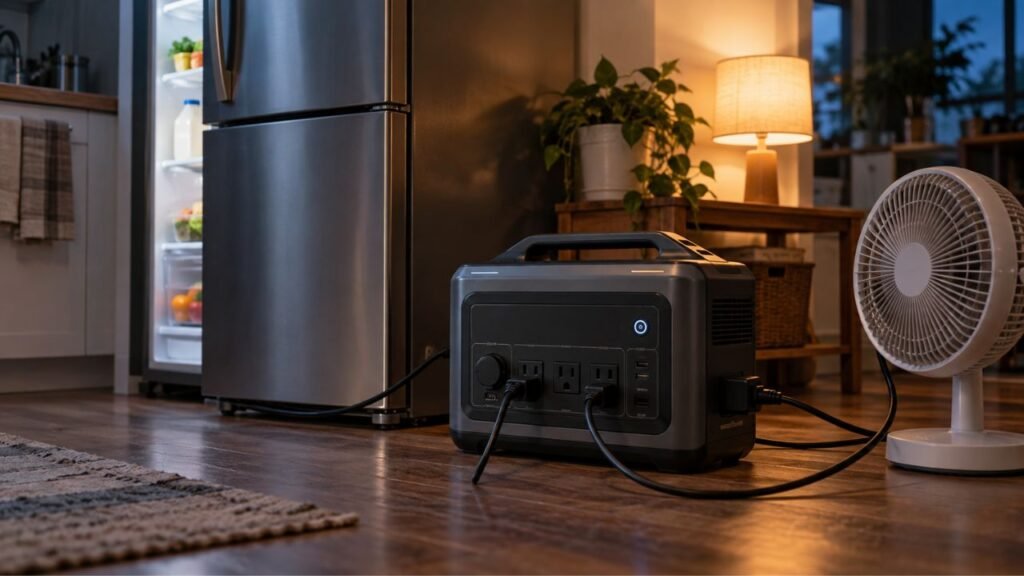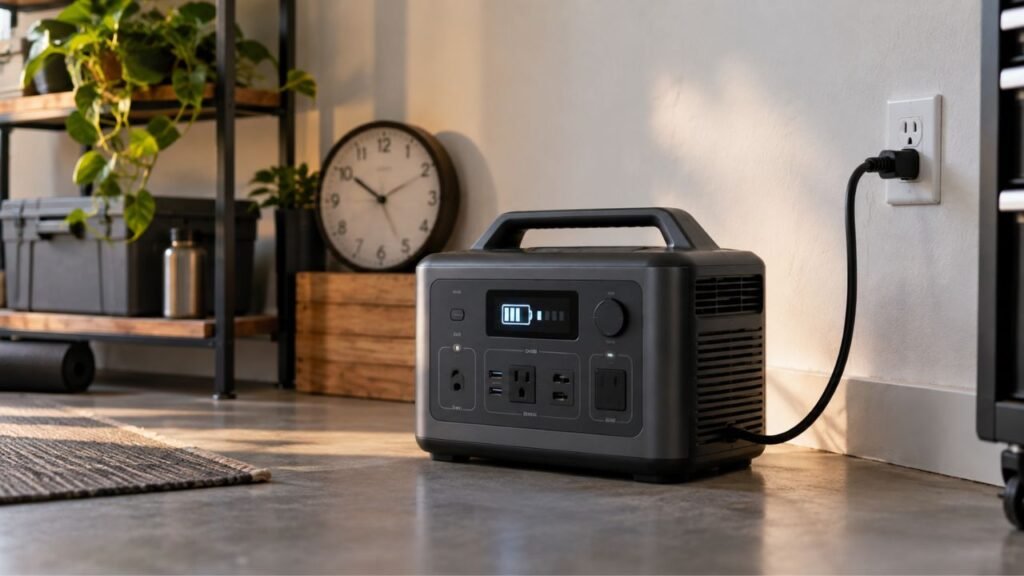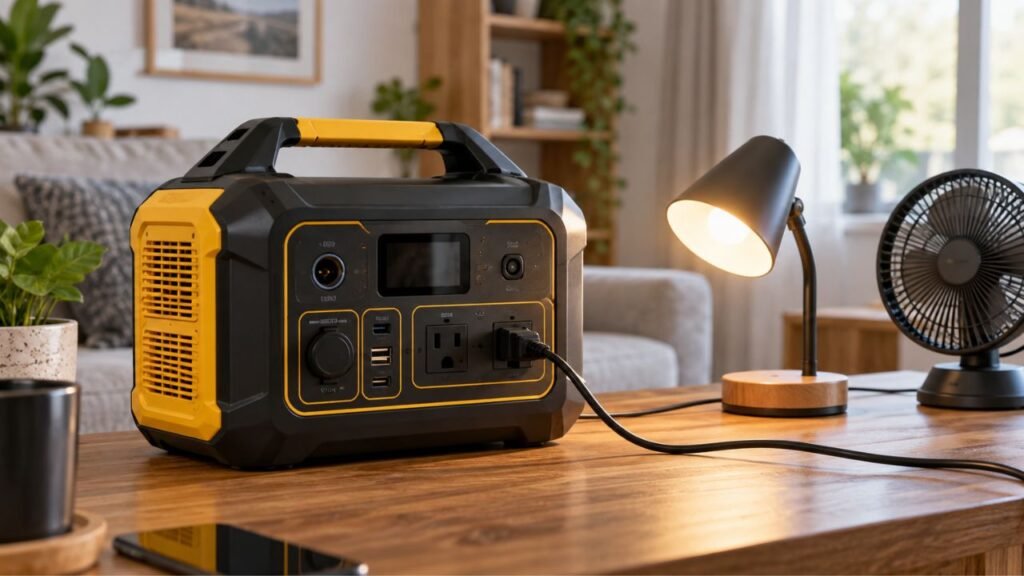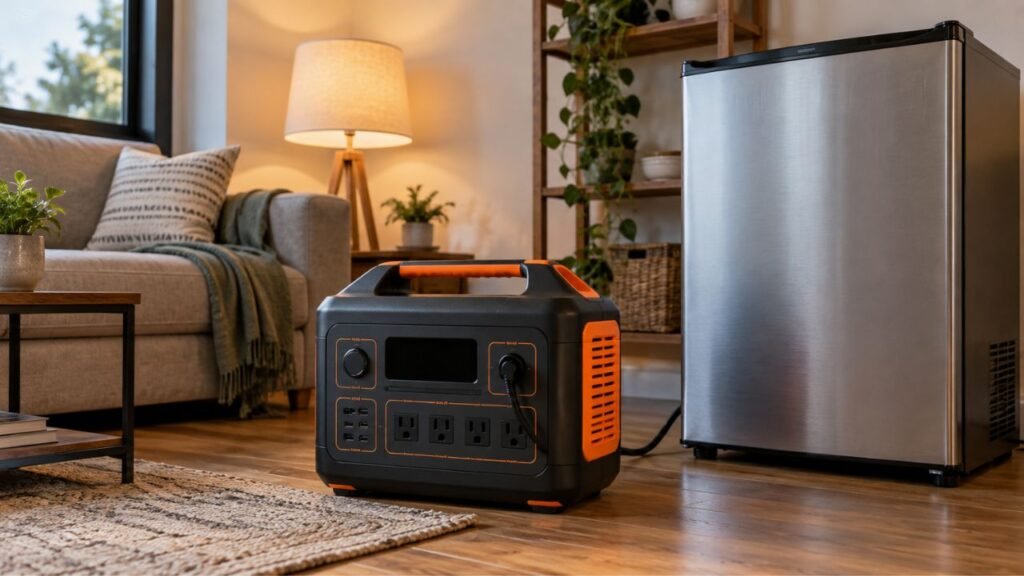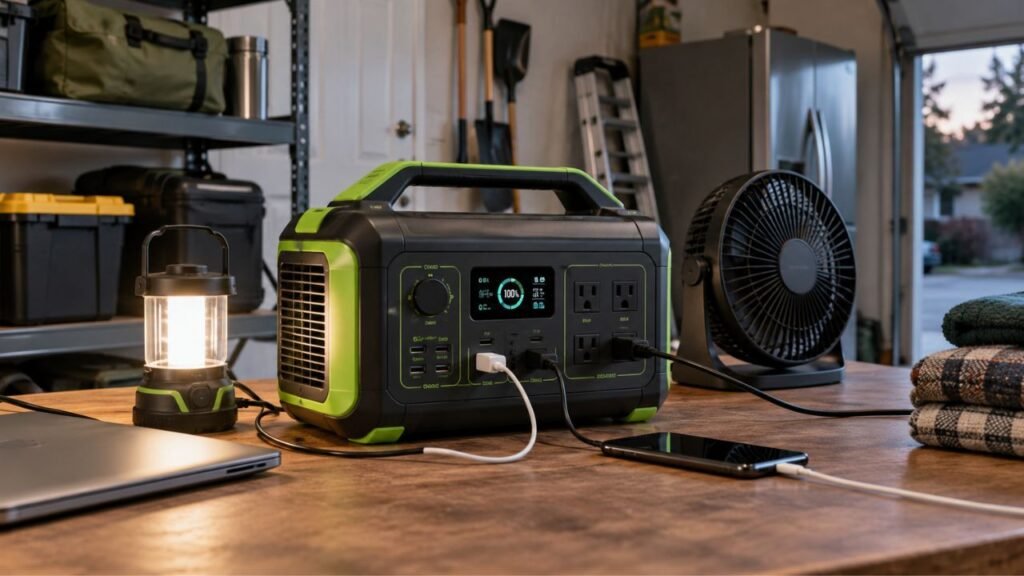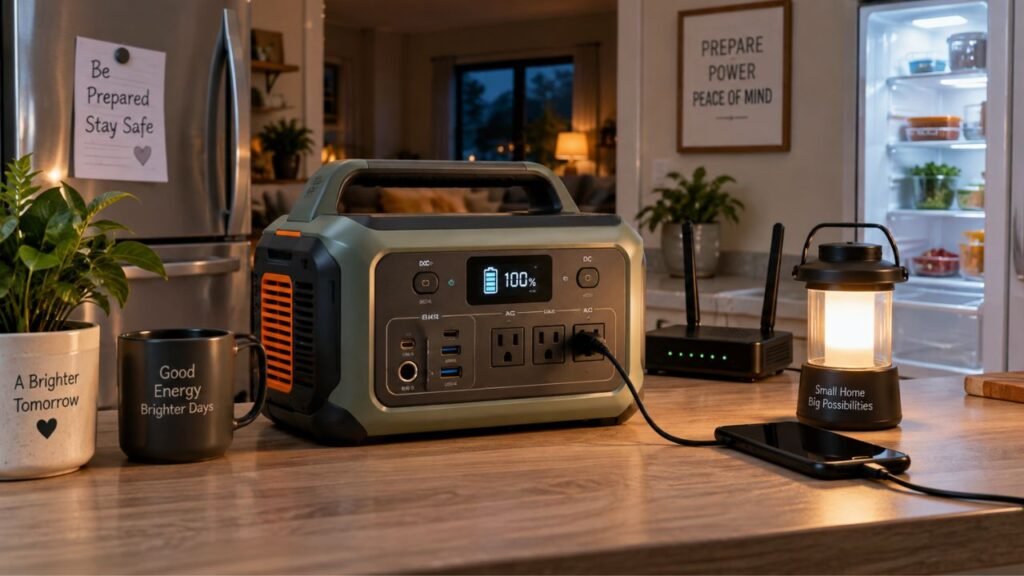
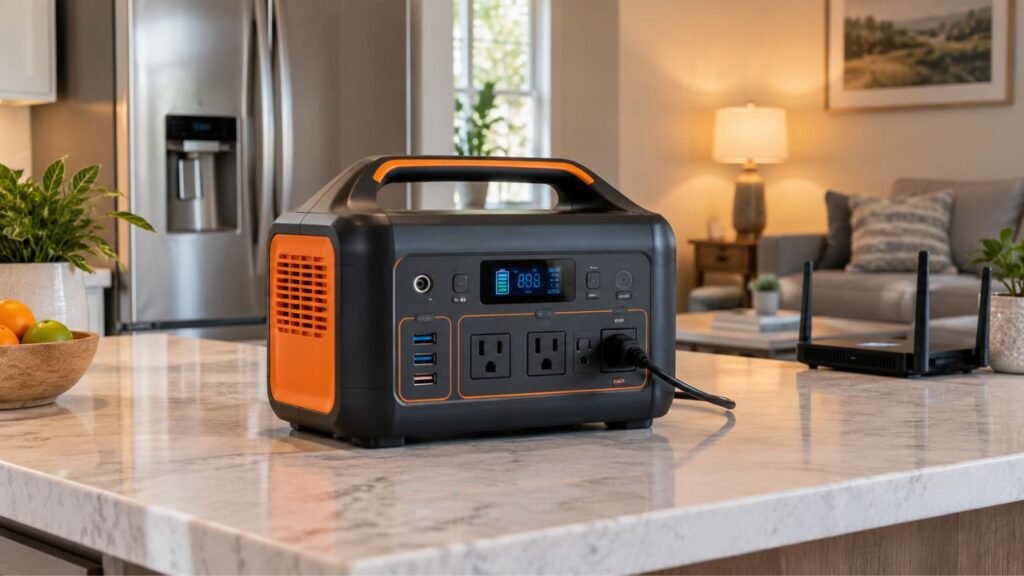
A portable power station should support your most important home circuits first. Prioritize refrigeration, essential lighting, internet, medical equipment, and critical outlets. Depending on your home, you may also need a sump pump, furnace, or well pump circuit.
The right circuit list depends on your power station’s output and capacity. Below, I’ll help you decide which circuits deserve backup power. You’ll also learn which loads to avoid and how to prevent overloads.
Key Takeaways
- Back up health, safety, food, communication, and property-protection circuits first.
- Refrigerators, lights, routers, and essential outlets usually deserve priority.
- Sump pumps and heating equipment may become critical during certain outages.
- Well pumps require careful checking because many operate at 240 volts.
- Circuit breaker size does not reveal actual power consumption.
- Motor-driven equipment may require high startup or surge power.
- A 120V power station cannot normally supply 240V household circuits.
- More connected circuits do not mean everything can run simultaneously.
- Battery capacity determines runtime, while inverter wattage determines usable load.
- Never backfeed household wiring through an ordinary wall outlet.
Which Home Circuits Should You Back Up First?
Your goal is not to power every breaker during an outage. Instead, choose circuits that protect your health, home, and basic comfort. Start with the highest-value loads before adding convenience circuits.
| Priority | Home Circuit | Why It Matters | Typical Voltage | Main Concern |
| Very High | Refrigerator or freezer | Protects stored food | Usually 120V | Compressor startup surge |
| Very High | Medical equipment outlet | Supports essential health equipment | Usually 120V | Runtime and device requirements |
| Very High When Needed | Sump pump | Helps prevent basement flooding | Often 120V | Motor startup surge |
| High | Gas furnace or boiler | Maintains heat during cold weather | Usually 120V | Blower or pump startup |
| High | Internet and router | Maintains communication | 120V | Low continuous draw |
| High | Essential lighting | Provides safe movement and visibility | 120V | Number of lights |
| High | Selected outlet circuit | Runs chargers and small electronics | 120V | Other connected appliances |
| Conditional | Well pump | Maintains household water | Often 240V | Voltage and startup load |
| Conditional | Security equipment | Maintains monitoring and access | Usually 120V | Equipment requirements |
| Lower | Convenience kitchen circuit | Supports limited cooking | 120V | High-watt appliances |
These priorities are only a starting point. Your home may need a different order.
Someone with a basement sump pump may prioritize it first. A rural homeowner may consider the well pump equally important.
Backing Up a Circuit Is Different From Powering One Appliance
Plugging an appliance directly into your power station is straightforward. You connect the appliance, turn on AC output, and monitor usage.
Backing up a breaker circuit works differently.
When you energize a circuit through approved home integration equipment, everything connected to that circuit may receive power. That can include appliances and outlets you did not intend to use.
Imagine your refrigerator shares a circuit with several kitchen outlets. The refrigerator may use relatively modest power during normal operation.
Then someone turns on a coffee maker.
Another person starts the toaster.
At the same moment, the refrigerator compressor starts running.
Your power station suddenly sees several loads instead of one. That unexpected combination could trigger an overload shutdown.
This is why you should understand each selected circuit completely. Do not assume the circuit serves only its main labeled appliance.
Circuits Most Homes Should Prioritize
Most households have several circuits that provide excellent backup value. They support essential functions without consuming excessive battery energy.
Refrigerator and Freezer Circuit
Refrigeration should usually sit near the top of your list. Losing food during an extended outage can become expensive quickly.
A refrigerator does not normally draw maximum power continuously. Its compressor starts and stops throughout the day.
The important issue is startup demand.
A compressor may briefly require considerably more power while starting. Your portable power station must handle that short surge.
Check both normal running requirements and startup requirements whenever possible.
A separate freezer may also deserve backup power. However, you do not always need both running continuously.
Opening refrigerators and freezers less often can reduce compressor cycling. It also helps preserve internal temperatures during outages.
If battery energy becomes limited, you can sometimes alternate refrigeration loads. Just make sure food temperatures remain safe.
Essential Lighting Circuit
You probably do not need every light inside your house. A few strategic lighting circuits can make an outage much easier.
Good areas to prioritize include:
- Kitchen
- Hallway
- Bathroom
- Main living area
- Stairways
- Important entry areas
LED lighting works especially well for battery backup. Modern LED bulbs provide useful light while consuming relatively little electricity.
Consider keeping only the rooms you actively use illuminated. Turn unnecessary lights off to stretch battery runtime.
One well-selected lighting circuit can often provide more practical value than several convenience circuits.
Internet, Communication, and Charging Circuit
Internet equipment uses little power compared with most major appliances.
Your modem and router can help you:
- Receive weather updates
- Contact family
- Work remotely
- Check emergency information
- Use internet-based communication
- Monitor connected home equipment
Phone and laptop charging also consume relatively little energy.
Instead of backing up several rooms, choose one convenient outlet circuit. Use that location as your temporary charging area.
However, check everything else connected to that circuit first.
You do not want someone accidentally starting a high-powered device. That could overload the system while everyone charges electronics.
Medical Equipment and Its Required Outlet
Medical equipment may become the highest-priority load in your home.
Examples can include:
- CPAP equipment
- Certain oxygen equipment
- Electrically powered mobility equipment
- Medication refrigeration equipment
- Other medically necessary devices
Do not estimate these loads using generic online wattage charts alone.
Check the device label and owner’s manual. Follow the equipment manufacturer’s backup-power recommendations as well.
Some medical devices have specific electrical or reliability requirements. Your portable power station must meet those requirements before relying on it.
Battery runtime matters especially for overnight equipment.
Calculate how many hours the equipment needs to operate. Then reserve enough capacity for that requirement before adding convenience loads.
Home-Specific Circuits That May Be More Important Than Lights or Wi-Fi
Your climate and home design can completely change backup priorities. Some circuits become critical only under specific conditions or seasons.
Sump Pump Circuit
A sump pump may become your most important backup circuit. This is especially true during storms or prolonged rainfall.
The pump protects your basement from rising groundwater.
Unfortunately, pumps also create challenging electrical loads.
You need to consider:
- Running wattage
- Startup wattage
- Pump cycling frequency
- Expected outage duration
- Available battery capacity
A sump pump may run only occasionally during normal weather. During severe rain, it could cycle much more frequently.
That difference can dramatically change battery consumption.
Make sure your power station can start the pump reliably. Then calculate whether the battery can support repeated operation.
If the sump pump protects a finished basement, prioritize it highly.
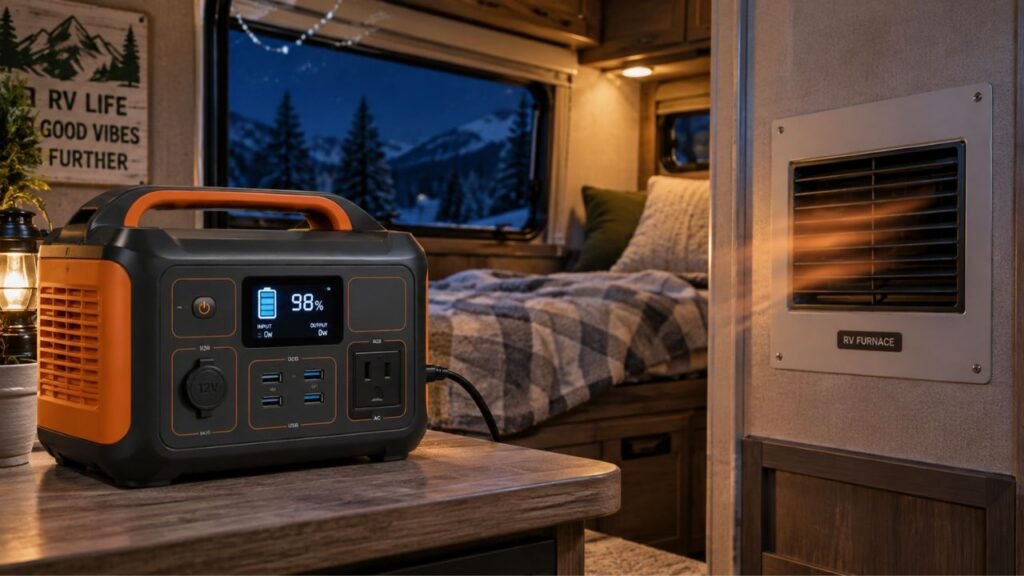
Gas Furnace or Boiler Circuit
A gas furnace still needs electricity to operate.
Natural gas or propane may provide the heat. However, electrical components still run the system.
Depending on the equipment, these components may include:
- Blower motor
- Ignition system
- Control board
- Thermostat circuit
- Circulation pumps
- Safety controls
This makes furnace backup particularly important during winter outages.
The blower motor may create a startup surge. Check whether your power station can handle it.
Boiler systems may use less power than forced-air systems. However, pumps and controls still need electricity.
Do not assume every furnace uses the same amount.
Check your specific equipment before building your backup plan.
Well Pump Circuit
A private well changes your backup requirements significantly.
Without electricity, many well systems cannot provide normal household water. That makes the pump extremely important during longer outages.
Unfortunately, well pumps can also be difficult backup loads.
Many well pumps use 240V power. Some use 120V instead.
They can also require substantial startup current.
Before selecting a well pump circuit, verify:
- Operating voltage
- Running wattage
- Starting wattage
- Pump horsepower
- Power station voltage output
- Power station surge capability
Having enough battery capacity does not solve a voltage mismatch.
A large 120V power station still cannot normally operate a 240V well pump.
For well-pump backup, equipment compatibility matters as much as capacity.
Septic or Sewage Pump Circuit
Some homes have electrically powered sewage or septic equipment.
These loads may not seem important during short outages. However, they can become increasingly important as outages continue.
A pump failure may prevent normal wastewater movement. That can eventually cause unpleasant or damaging problems.
Check whether your home uses electrically powered septic equipment.
If it does, determine the voltage and startup load. Then decide where it belongs within your priority plan.
Security System and Garage Door Circuit
Security equipment usually consumes relatively little power.
Keeping cameras, alarm equipment, and communication devices running can provide useful protection during outages.
A garage door opener can also be convenient.
However, these loads normally rank below:
- Medical equipment
- Refrigeration
- Heating during dangerous cold
- Sump pumps
- Water systems
Also remember that many garage doors can be manually released. Learn your door’s manual procedure before an outage occurs.
Which Home Circuits Should You Usually Leave Off?
Some household circuits consume battery energy very quickly. Others require voltage or output levels beyond ordinary portable power stations.
Usually avoid prioritizing:
- Central air conditioners
- Large heat pumps
- Electric resistance furnaces
- Electric baseboard heating
- Electric water heaters
- Electric ranges
- Electric ovens
- Clothes dryers
- Level 2 EV chargers
- Hot tubs
- Electric pool heaters
- Large workshop machinery
This does not mean these circuits are impossible to back up.
Some larger expandable systems can provide substantial 120V and 240V output. Those systems may support heavier home loads when properly configured.
However, high-demand equipment requires careful system sizing.
For a normal outage plan, protecting essential functions usually makes more sense.
Running a large electric heater can drain valuable battery capacity quickly. That same energy could power refrigeration, lights, and communication much longer.
Does Your Power Station Support 120V or 240V Circuits?
Voltage compatibility is one of the first things you should check. Enough wattage alone does not guarantee a circuit will work.
Most ordinary household outlets and lighting circuits in the United States use 120V.
Many larger household appliances use 240V.
Common 240V loads may include:
- Central air conditioners
- Electric dryers
- Electric ranges
- Water heaters
- Certain well pumps
- Large heat pumps
- Workshop equipment
A standard 120V portable power station cannot simply power them.
Even if the station offers several thousand watts, voltage still matters.
Some larger portable power systems provide true 120/240V output. Certain systems can also provide split-phase power for compatible home installations.
Before selecting any 240V circuit, verify:
- Output voltage
- Split-phase support
- Continuous output
- Surge output
- Connector type
- Home integration compatibility
Never assume two standard 120V outlets automatically create usable 240V service.
Your power station must be specifically designed for that purpose.
How Many Home Circuits Can a Portable Power Station Support?
The number of available circuits does not determine actual power capability. What matters is how much electricity those circuits consume together.
You could connect several low-demand circuits to one backup system.
For example:
- LED lighting
- Internet equipment
- Refrigerator
- Phone charging
- Television
Those loads might remain manageable together.
However, two demanding circuits could overload the same station.
Imagine running:
- Microwave
- Sump pump
- Coffee maker
- Refrigerator compressor
Their combined demand may exceed the inverter’s continuous output.
The real limits are:
- Continuous inverter output
- Surge or startup capability
- Battery capacity
- Output voltage
A transfer switch may offer several circuit positions. That does not mean every connected circuit should run simultaneously.
Think of circuit positions as available choices.
Your power station’s output determines how many loads can actually operate.
How to Check Whether Your Power Station Can Handle Your Selected Circuits
You do not need complicated electrical engineering calculations. A simple load inventory can reveal most compatibility problems before an outage occurs.
Step 1: Identify Everything Connected to Each Circuit
Start at your electrical panel.
Look at the breakers you are considering for backup.
Do not trust labels completely.
A breaker labeled “kitchen” might power an unexpected outlet elsewhere. Older homes may have especially confusing circuit layouts.
One practical method is switching off one breaker temporarily.
Then check which appliances, lights, and outlets lose power.
Record everything connected to the circuit.
Repeat this process for every backup circuit you are considering.
If you are uncomfortable testing circuits, have an electrician help map them.
Knowing exactly what each breaker controls prevents accidental overloads later.
Step 2: Find Each Appliance’s Running Watts
Next, determine how much power each important appliance normally requires.
Check:
- Appliance labels
- Owner’s manuals
- Manufacturer specifications
- Power station monitoring
- Suitable plug-in energy meters
Do not rely completely on generic wattage charts.
Two refrigerators may use very different amounts of power. The same applies to pumps, furnaces, freezers, and electronics.
Record the actual requirements whenever possible.
Then list the devices likely to operate simultaneously.
That gives you a much more realistic outage load.
Step 3: Check Startup or Surge Requirements
Motor-driven appliances often need extra power when starting.
Common examples include:
- Refrigerators
- Freezers
- Sump pumps
- Well pumps
- Furnace blowers
- Window air conditioners
Your station might easily support the appliance while running. It could still shut down when the motor starts.
Compare the appliance’s startup requirement with the station’s surge rating.
Also consider other loads already operating during startup.
For example, your furnace blower may start while the refrigerator operates.
The station must handle that combined momentary demand.
Step 4: Calculate the Maximum Simultaneous Load
Add the running wattage of devices likely to operate together.
Use this simple calculation:
Combined running load = Appliance 1 watts + Appliance 2 watts + Appliance 3 watts
Suppose your outage loads are:
- Refrigerator: 150W while running
- Internet equipment: 30W
- Lighting: 80W
- Laptop: 70W
The combined operating load would be about 330 watts.
However, your refrigerator may require additional startup power.
Your station must handle the normal combined load plus expected surges.
Do not calculate every connected device as though it always operates simultaneously. Instead, build a realistic worst-case scenario.
Step 5: Calculate Daily Energy Consumption
Power output tells you whether something can run.
Battery capacity tells you how long it can run.
Use:
Energy consumption in Wh = Watts × Operating hours
A 50W device operating for ten hours uses roughly:
50W × 10 hours = 500Wh
However, cycling appliances require a different approach.
A refrigerator does not normally consume its running wattage every minute. Its compressor switches on and off throughout the day.
The same applies to furnaces and certain pumps.
Measured daily energy consumption gives you a better estimate when available.
You should also account for inverter and system losses.
A power station’s full advertised battery capacity is not always available at its AC outlets.
Step 6: Leave Some Operating Headroom
Avoid planning to run continuously at the inverter’s absolute maximum rating.
Some extra capacity gives you room for:
- Unexpected startup loads
- Forgotten devices
- Appliance cycling
- Shared outlets
- Changing conditions
For example, a 2,000W inverter does not mean your ideal continuous outage plan should constantly demand exactly 2,000 watts.
Leaving reasonable headroom makes the system easier to manage.
It also reduces nuisance overload shutdowns.
Watts and Watt-Hours Decide Two Different Things
Watts and watt-hours answer different questions. Understanding both keeps your backup plan realistic.
Watts answer this question:
Can your power station operate these loads simultaneously?
Watt-hours answer this question:
How long can the battery keep those loads operating?
Suppose your station has a 2,000W inverter.
That tells you its output capability.
Now suppose its battery capacity is 2,000Wh.
That tells you something completely different.
A continuous 1,000W load could drain that battery relatively quickly.
A 100W average load could run much longer.
A simple runtime estimate is:
Estimated runtime = Usable battery energy ÷ Average load
Real-world runtime can be lower because of:
- Inverter losses
- Battery-management limits
- Temperature
- Appliance cycling
- Standby consumption
- Changing loads
That is why both wattage and battery capacity matter.
Build Your Circuit List Around Consequences, Not Convenience
The easiest way to choose backup circuits is ranking consequences. Ask what happens if each circuit remains off for several hours.
Priority 1: Health and Immediate Safety
Start with anything affecting someone’s immediate health or safety.
This could include:
- Essential medical equipment
- Critical heating during dangerous cold
- Necessary lighting
- Other health-related equipment
These loads deserve battery energy before ordinary convenience appliances.
Priority 2: Prevent Property or Food Loss
Next, protect your home and stored food.
Typical examples include:
- Sump pump
- Refrigerator
- Freezer
- Well equipment
- Septic equipment
The correct order varies by situation.
During heavy rainfall, a sump pump may outrank refrigeration temporarily.
During a long summer outage, refrigeration may become your biggest concern.
Priority 3: Communication and Basic Daily Function
Once immediate risks are covered, maintain communication.
Useful circuits include:
- Internet equipment
- Phone charging
- Laptop charging
- Selected general-purpose outlets
- Basic home office equipment
These devices usually offer strong value without consuming much battery energy.
Priority 4: Comfort and Convenience
Comfort loads come last.
Examples may include:
- Television
- Coffee maker
- Microwave
- Entertainment devices
- Extra lighting
- Convenience outlets
You can still use these loads when capacity allows.
However, switch them off first when battery energy becomes limited.
Should You Back Up an Entire Kitchen Circuit?
A kitchen circuit can be useful during an outage. It can also become one of the easiest circuits to overload.
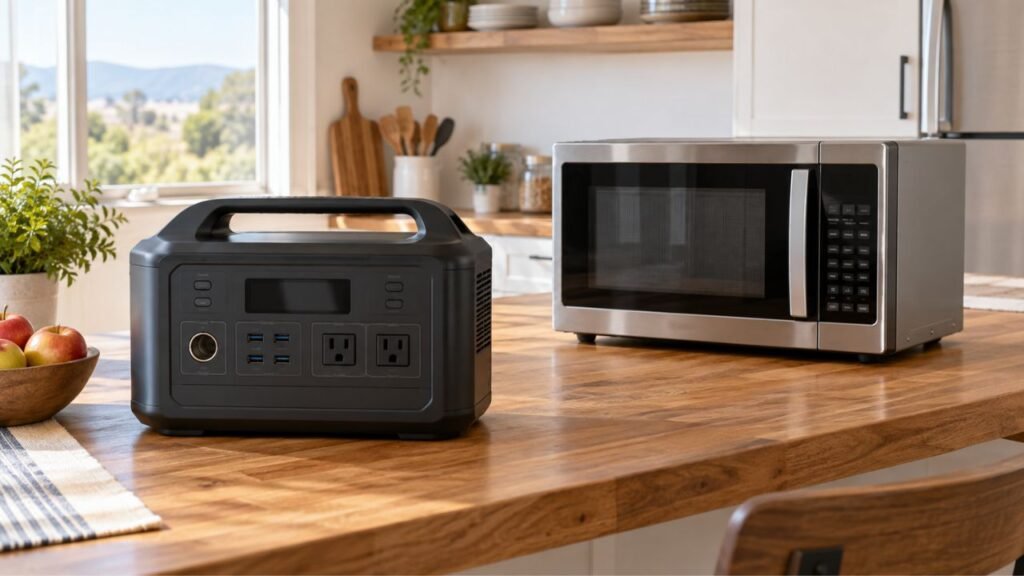
Kitchen appliances often draw substantial power.
Common examples include:
- Microwave
- Coffee maker
- Toaster
- Electric kettle
- Air fryer
- Blender
Running one of these temporarily may be perfectly reasonable.
Running several together could create a large combined load.
Suppose your refrigerator shares backup power with countertop outlets.
Someone starts the coffee maker while another uses the microwave. Your refrigerator compressor starts seconds later.
That combination could exceed your station’s output.
The solution is simple load management.
Use one high-draw kitchen appliance at a time whenever possible.
You might temporarily pause another load before running the microwave.
Your backup setup does not have to run everything simultaneously.
Direct Connection vs Backing Up Circuits Through the Electrical Panel
There are two common ways to use portable battery power at home. Your choice depends on what equipment you need to operate.
Plugging Appliances Directly Into the Power Station
Direct connection is usually the simplest method.
You place the station safely indoors according to manufacturer requirements. Then you plug compatible devices directly into its outlets.
Good direct-connect loads include:
- Refrigerator
- Freezer
- Router
- Lamps
- Phone chargers
- Laptops
- Certain medical devices
This method avoids modifying household wiring.
It is especially practical during shorter outages.
The main limitation involves hardwired equipment.
A furnace, built-in lighting circuit, or certain pumps cannot simply be unplugged from the wall and moved beside the station.
That is where home integration may become useful.
Using a Transfer Switch or Compatible Home-Integration System
A properly designed home-integration setup can supply selected household circuits.
This lets backup power reach hardwired equipment and existing outlets.
Potentially useful circuits include:
- Furnace
- Essential lights
- Refrigerator
- Sump pump
- Well pump when compatible
- Selected outlets
However, your portable power station must support the integration method.
The transfer equipment must also match the electrical system.
This work involves your home’s electrical panel, so proper installation matters.
Use compatible listed equipment according to manufacturer instructions.
A qualified electrician should handle panel modifications and required installation work.
Never Backfeed a Home Through a Wall Outlet
Never try to power household wiring by connecting your portable power station to an ordinary wall receptacle.
Improvised backfeeding can create dangerous electrical conditions.
Do not use homemade male-to-male cords or similar arrangements.
Backfeeding may energize wiring unexpectedly.
It can expose people to electric shock and create fire hazards.
If you want your station to supply household circuits, use equipment designed for that purpose.
Possible solutions may include:
- Compatible transfer switches
- Approved power inlet arrangements
- Manufacturer-designed home backup systems
The correct setup depends on your power station and electrical panel.
Follow manufacturer instructions and applicable electrical requirements.
When panel work is required, hire a qualified electrician.
A Practical Essential-Circuit Plan for Most Homes
You can use a simple priority template when building your plan. Then customize it according to your home’s specific risks.
A practical starting list could include:
- Refrigerator or freezer circuit
- One strategic lighting circuit
- Internet and communication equipment
- One selected charging or outlet circuit
- Medical equipment circuit when necessary
- Sump pump or heating circuit when needed
Different homes should adjust this list differently.
Cold-climate homes:
A furnace or boiler may outrank convenience outlets.
Homes with basements:
A sump pump may become essential during severe storms.
Homes using private wells:
Water supply may deserve high priority.
Apartments:
Refrigeration, internet, lighting, and charging may cover most needs.
Homes in hot climates:
A portable fan or efficient window AC may become valuable if capacity allows.
Do not copy someone else’s backup circuit list blindly.
Build your plan around the consequences you personally want to avoid.
Common Mistakes When Choosing Backup Circuits
Choosing the right circuits becomes easier when you avoid common planning errors.
Watch out for these mistakes:
- Choosing circuits based only on breaker amperage
- Assuming breaker size equals actual power consumption
- Forgetting other outlets sharing the same circuit
- Ignoring refrigerator or pump startup surge
- Trying to power 240V equipment from a 120V-only station
- Backing up every room instead of essential functions
- Running several kitchen heating appliances simultaneously
- Calculating watts but forgetting battery capacity
- Ignoring winter-specific backup requirements
- Ignoring summer-specific cooling requirements
- Forgetting about sump pumps during storm outages
- Choosing too many convenience circuits
- Never testing loads before an actual blackout
- Assuming every connected circuit can run together
- Using unsafe backfeeding methods
A simple written backup plan eliminates many of these problems.
Keep your chosen circuit list near your electrical panel.
You can also note which loads should never operate simultaneously.
Test Your Selected Circuits Before an Outage
A backup plan should work before you actually need it. Testing shows whether your estimates match real-world performance.
Run a Normal Essential-Load Test
Charge your power station before testing.
Then operate the equipment you expect to use during an outage.
Monitor:
- Current output watts
- Battery percentage
- Estimated runtime
- Cooling fan activity
- Temperature warnings
- Overload warnings
Let the system run long enough to observe normal appliance cycling.
A five-minute test may not reveal refrigerator or furnace startup behavior.
A longer test gives you much more useful information.
Test Motor Loads Starting
Motor loads deserve special attention.
Allow your refrigerator, freezer, furnace blower, or pump to start while other essential devices remain running.
Watch the power station’s output display.
If it shuts down, you may have exceeded surge capability.
Reduce other loads and test again.
This shows which appliances can safely operate together.
Practice Load Shedding
Load shedding simply means switching something off to reduce demand.
Decide your shutdown order before an outage.
For example:
- Turn off kitchen convenience appliances.
- Stop entertainment equipment.
- Reduce unnecessary lighting.
- Pause non-essential charging.
- Preserve power for refrigeration and critical loads.
This keeps you from making rushed decisions during a blackout.
Final Words
A portable power station should support the circuits that protect your health, food, property, communication, and basic living needs.
For many homes, that means starting with refrigeration, essential lighting, internet equipment, and selected outlets. Medical equipment should receive higher priority whenever necessary.
Your house may also need a furnace, sump pump, or well pump.
The best backup setup is not the one powering the most breakers. It is the one keeping the most important functions running reliably.
Before choosing circuits, check five things:
Voltage, continuous watts, startup watts, battery capacity, and connection method.
Once those numbers match your needs, test the setup before storm season.
A short practice outage can reveal problems while you still have grid power.
Related FAQs
What Is the Most Important Circuit to Back Up During an Outage?
There is no single answer for every home. Refrigeration is commonly important, but medical equipment, sump pumps, heating, or well pumps may deserve higher priority depending on your situation.
Can a Portable Power Station Power an Entire Household Circuit?
Yes, compatible power stations can support selected household circuits through properly designed transfer equipment. However, the total load connected to that circuit must remain within the station’s output limits.
How Many Circuits Can a 2,000W Portable Power Station Run?
There is no fixed number because circuit count does not determine wattage. A 2,000W station might run several low-power circuits, but only a few demanding loads simultaneously.
Can a Portable Power Station Run a Refrigerator and Furnace Together?
Possibly. Add their running loads and consider both startup surges. The station’s continuous and surge ratings must handle their combined demand when motors start.
Can a Portable Power Station Run a Sump Pump?
Many can run compatible 120V sump pumps when their output and surge ratings are sufficient. Check your pump’s actual starting and running requirements before relying on the setup.
Can a Portable Power Station Power a Well Pump?
It depends on the pump. Many well pumps require 240V and substantial startup power, so you need a station specifically capable of supplying the required voltage and surge.
Should I Put My Kitchen Circuit on Backup Power?
A kitchen circuit can be useful, but manage high-watt appliances carefully. Microwaves, coffee makers, kettles, and toasters operating together may overload your portable power station.
Can a Portable Power Station Run 240V Home Circuits?
Only if the station is specifically designed to provide compatible 240V output. Standard 120V portable stations cannot normally operate 240V household circuits regardless of battery capacity.
Do I Need a Transfer Switch to Power Home Circuits?
You generally need compatible transfer or home-integration equipment when feeding selected household wiring. Plugging individual appliances directly into the station usually does not require a transfer switch.
Can I Connect a Portable Power Station to My Breaker Panel?
Some portable power stations support properly designed home-panel integration. The exact setup depends on the station, transfer equipment, electrical panel, and applicable installation requirements.
Should a Central Air Conditioner Be on a Backup Circuit?
Usually not with an ordinary portable power station. Central AC systems often require high 240V output and substantial startup power, although some larger home-backup systems can support them.
Is It Better to Back Up More Circuits or Extend Battery Runtime?
Extending runtime usually provides more value during unpredictable outages. Prioritize critical circuits first, then add convenience circuits only when output and battery capacity comfortably allow them.
What Happens If My Backup Circuits Use More Watts Than the Power Station Can Supply?
Most modern power stations activate overload protection and shut off AC output. Reduce the connected load before resetting and restarting the station.
Can Lights and Outlets Be on the Same Backup Circuit?
Yes, depending on your home’s wiring. The important issue is identifying everything connected to that circuit and keeping the combined demand within your power station’s limits.
Should I Back Up My Refrigerator or Freezer First?
Prioritize whichever contains more valuable or temperature-sensitive food. If both matter, you may support both or alternate them carefully when battery capacity becomes limited.

Warren Turner writes practical guides and reviews on generators, portable power stations, and battery backup systems. He focuses on real-world performance, everyday power needs, and helping readers choose dependable equipment without unnecessary complexity.